



When you search for the top rated GLP-1 supplement, you’ll find ingredients like berberine and specific fibers. These are often positioned for metabolic health, but they operate on a completely different level than prescription drugs.
While no supplement can replace a pharmaceutical, the goal of a well-formulated one is to support your body's natural systems for managing appetite and blood sugar. The right choice hinges on your specific goals, whether that’s improving insulin sensitivity or simply feeling fuller after meals.
The Difference Between Prescription GLP-1s and Supplements
The conversation around GLP-1 has exploded, thanks almost entirely to the massive impact of prescription drugs like Ozempic, Wegovy, and Mounjaro. These pharmaceuticals shot to fame because they deliver significant, undeniable results for both weight loss and blood sugar management.
The numbers don't lie. Prescriptions for these GLP-1 receptor agonists soared by an incredible 587% between 2019 and 2024 for treating overweight or obesity. The growth among non-diabetic adults is even more staggering, jumping by nearly 1,961% in that same period.
Understanding the Key Players
To see why these two categories aren't interchangeable, you first have to understand what GLP-1 is. Glucagon-like peptide-1 (GLP-1) is a hormone your gut releases after you eat. It has three main jobs: telling your pancreas to release insulin, slowing down stomach emptying, and signaling to your brain that you're full.
Prescription GLP-1 drugs are synthetic, lab-created versions of this hormone. They are powerful medications designed to directly activate GLP-1 receptors, essentially putting this entire metabolic pathway into overdrive.
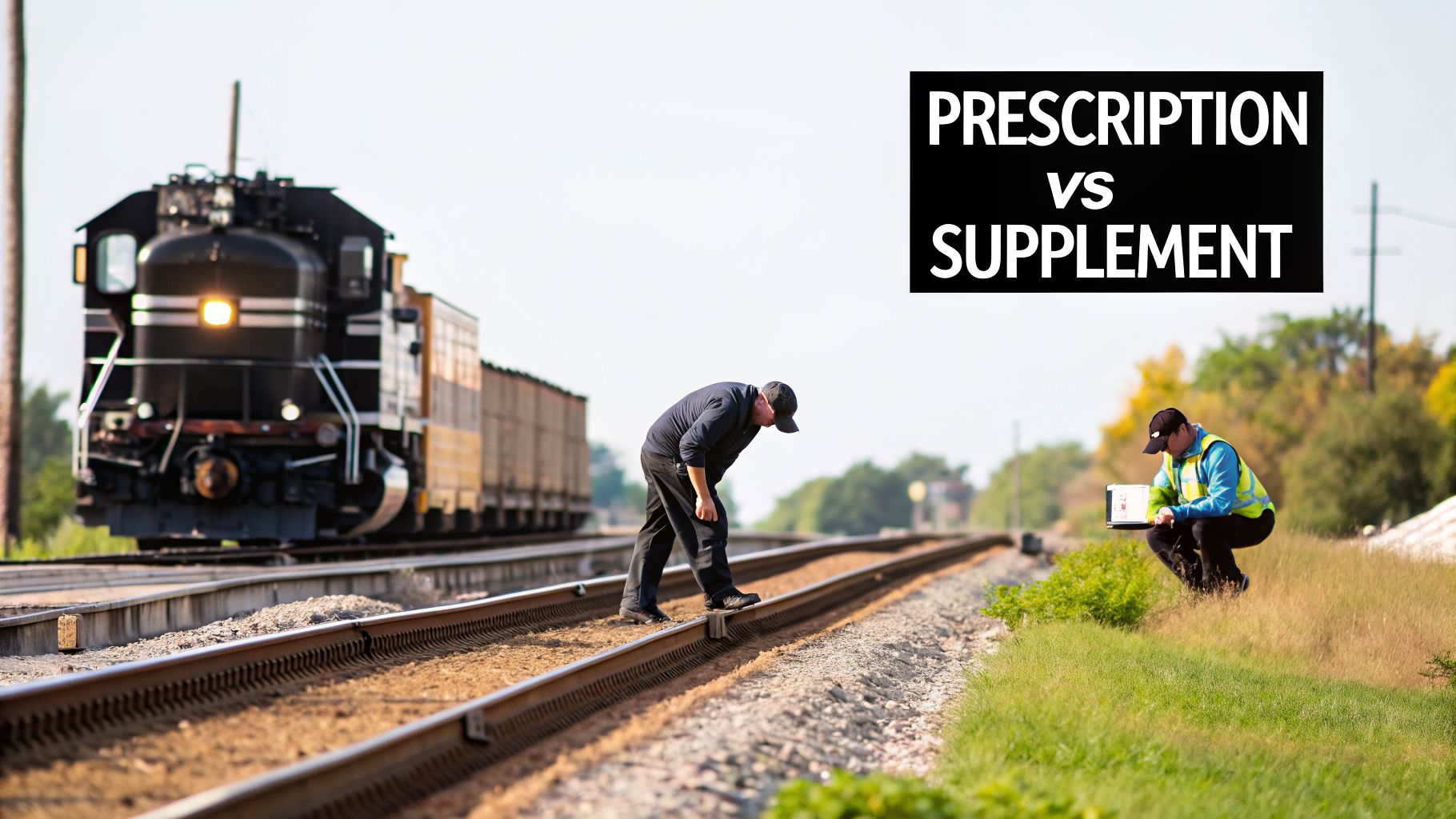
Think of it this way: A prescription GLP-1 drug is like a high-speed locomotive, forcefully pulling your metabolic train down the tracks. A supplement, on the other hand, is like the maintenance crew—it supports the engine and keeps the tracks clear, helping everything run smoothly without providing the raw horsepower.
Over-the-counter supplements work through entirely different and indirect routes. They contain no synthetic hormones and don't mimic them. Instead, ingredients like berberine or soluble fibers aim to support the body's systems related to GLP-1.
For example, a supplement might:
- Help improve your body’s own insulin sensitivity.
- Slow down digestion to enhance feelings of fullness.
- Promote a healthy gut microbiome, which is involved in natural GLP-1 production.
Why People Seek Alternatives
While the results of prescription drugs are impressive, they come with major trade-offs. The cost can run into thousands of dollars a month without insurance, putting them out of reach for most people. They also require a doctor's prescription and carry a risk of side effects, from common nausea to more significant health concerns.
These barriers have created a huge demand for a supportive, accessible top rated GLP-1 supplement. People want ways to support their metabolic health and weight goals without the cost, hassle, and side effect profile of pharmaceuticals.
To help you see the differences clearly, here’s a quick side-by-side comparison.
Prescription GLP-1 Agonists vs GLP-1 Supplements At a Glance
| Attribute | Prescription GLP-1 Agonists (e.g., Ozempic) | GLP-1 Supplements (e.g., Berberine) |
|---|---|---|
| Mechanism | Directly activates GLP-1 receptors (drug-like action) | Indirectly supports metabolic pathways (e.g., insulin sensitivity) |
| Primary Effect | Strong suppression of appetite and blood sugar | Mild support for blood sugar, fullness, and metabolism |
| Regulation | FDA-approved prescription drug | Dietary supplement (regulated by DSHEA) |
| Accessibility | Requires a doctor's prescription | Over-the-counter (OTC) |
| Cost | Very high (often $1,000+/month without insurance) | Low to moderate |
| Side Effects | Common (nausea, vomiting); potential for serious issues | Generally mild, depends on the ingredient |
This table shows the fundamental divide: one is a powerful, direct-acting pharmaceutical, and the other is a supportive, indirect-acting nutrient. They are not in the same league.
If you're exploring non-prescription options, you can discover more about strategies for blood sugar and metabolic support in our other guides. The rest of this article will help you cut through the marketing hype to find what really works.
Evaluating Ingredients in GLP-1 Supplements
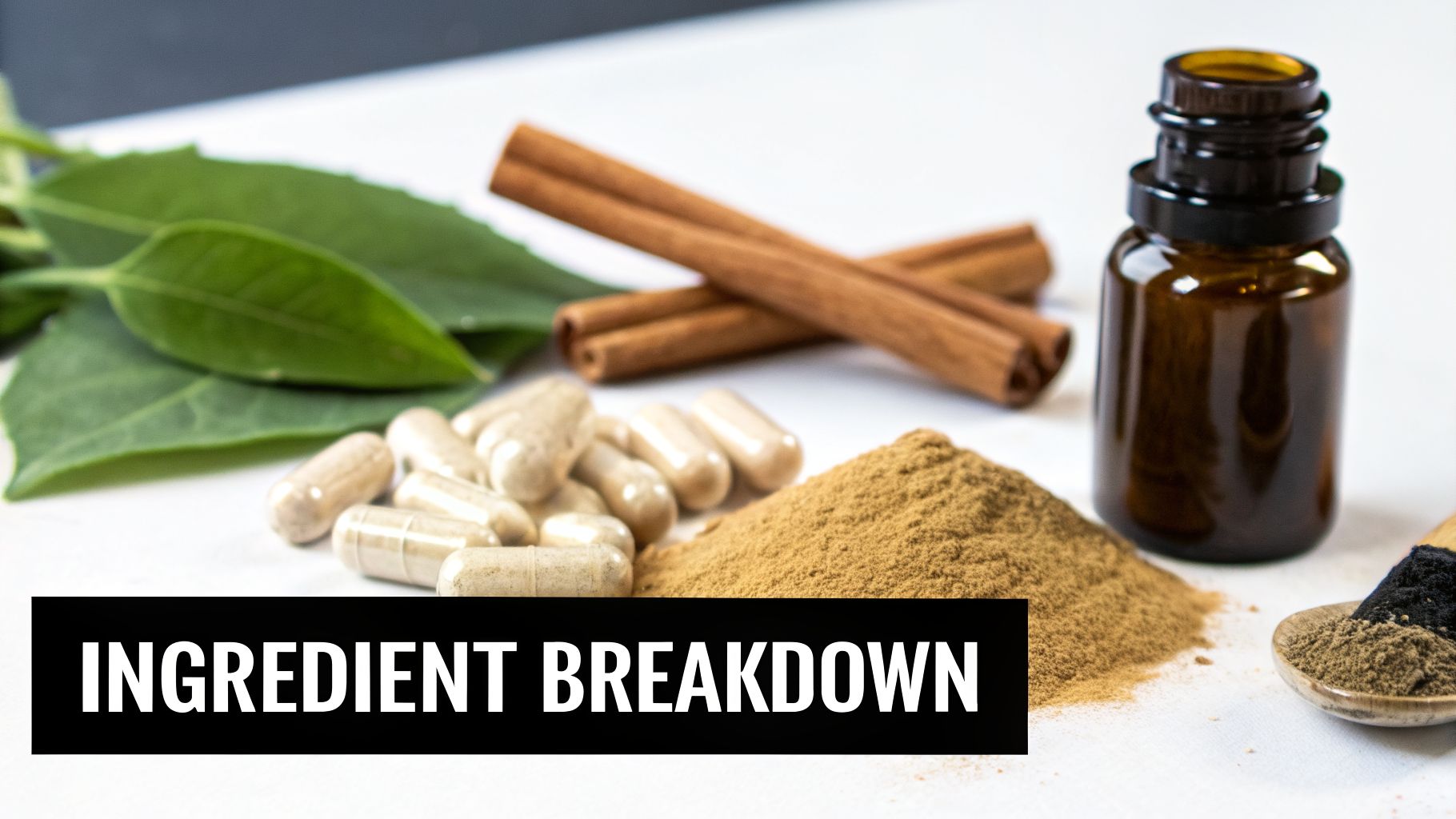
When you look for the top rated GLP-1 supplement, you’ll discover something important: none of them actually contain GLP-1. Instead, these products are packed with natural ingredients that brands claim can influence the same metabolic pathways. But do these compounds really deliver on their promises?
The answer isn't a simple yes or no. These ingredients don't work like prescription drugs, but some may provide indirect benefits for your metabolism. The key is to understand how they actually function, so you can tell the difference between solid science and clever marketing.
Berberine: The Metabolic Modulator
Berberine is, without a doubt, the most talked-about ingredient you'll find in this category, and for good reason. It’s a bioactive compound pulled from plants like barberry and goldenseal, and it has a long history in traditional medicine for supporting metabolic health.
So, how does it work? Berberine doesn’t bind to your GLP-1 receptors like the drugs do. Its real power lies in activating an enzyme called AMP-activated protein kinase (AMPK). Think of AMPK as your body’s master metabolic switch. Flipping it on helps your cells use energy more efficiently, which in turn affects blood sugar and fat storage.
Research shows that berberine has several key benefits:
- Improved Insulin Sensitivity: It helps your cells become more responsive to insulin, which is essential for managing blood sugar. Some studies have even found its effect on blood glucose is comparable to metformin.
- Reduced Glucose Production: Berberine can signal your liver to slow down glucose production, helping keep your blood sugar in a healthy range.
- Support for Healthy Cholesterol: It’s been shown to help lower LDL ("bad") cholesterol and triglycerides while raising HDL ("good") cholesterol.
For metabolic support, a typical effective dose is 900 to 1,500 mg per day. This is usually split into three doses of 300-500 mg taken with meals to help avoid potential digestive issues like cramping or nausea.
Inulin and Viscous Fibers: The Fullness Promoters
Another group of common ingredients includes soluble, viscous fibers like inulin, glucomannan, and psyllium husk. These work in a much more direct, mechanical way.
When you take these fibers with water, they expand into a thick, gel-like substance in your digestive tract. This gel does two things that support weight management and metabolic health.
First, it physically slows down gastric emptying—the rate at which food leaves your stomach. By keeping you feeling full for longer, it can naturally curb your appetite and reduce overall calorie intake. This process gives your body’s own satiety signals a helping hand.
Second, these fibers are prebiotics, meaning they feed the good bacteria in your gut. A healthy gut microbiome produces short-chain fatty acids (SCFAs), which are linked to your body's natural release of GLP-1. While the effect is modest and indirect, it shows how gut health fits into the bigger metabolic picture.
Cinnamon: The Insulin Sensitizer
Cinnamon is much more than a kitchen spice; it contains active compounds that can influence how your body handles blood sugar. Just like berberine, it doesn’t directly trigger GLP-1 production. Its main job is to help improve insulin sensitivity.
Studies suggest that cinnamon can mimic insulin to a small degree, helping transport glucose into your cells more effectively. This action reduces how much insulin your body needs to pump out after a meal. While it’s not nearly as powerful as a pharmaceutical, it offers gentle, supportive action.
If you’re looking for this benefit, seek out supplements that use ceylon cinnamon or standardized extracts. The more common cassia cinnamon contains higher levels of coumarin, a compound that can be harmful in large quantities.
Green Tea Extract (EGCG): The Antioxidant Ally
Green tea is famous for its powerful antioxidants, especially a catechin known as epigallocatechin gallate (EGCG). Although it’s a popular ingredient in weight loss supplements, its direct link to the GLP-1 pathway is minimal at best.
The real metabolic benefits of EGCG come from other mechanisms:
- Thermogenic Effect: It can provide a slight boost to your metabolism and increase fat oxidation, particularly when combined with caffeine.
- Antioxidant Support: It helps fight oxidative stress, which is often higher in people with metabolic issues.
While green tea extract is a great ingredient for overall health, don't count on it for GLP-1-like effects. It’s a solid supporting player, not the main star of the show.
Ultimately, a top rated GLP-1 supplement should be built with scientifically-backed ingredients at doses that actually work. To make sure you’re making a smart investment, check out our full guide on how to tell if a supplement is legit, which breaks down everything from reading labels to understanding third-party testing.
Understanding the Cost Versus Benefit
When you’re weighing a prescription GLP-1 drug against a supportive supplement, the conversation almost always lands on one thing: the massive difference in cost. For most people, this isn’t just about getting a better deal. It's about finding a realistic, long-term path to better metabolic health that won’t drain their bank account.
Let's get straight to the numbers. A one-month supply of a prescription GLP-1 agonist like Wegovy or Ozempic can run you over $1,000 to $1,500 if you don’t have great insurance coverage. That’s a yearly expense that rivals a down payment on a car.
On the other hand, even a top rated GLP-1 supplement with high-quality ingredients like berberine or viscous fiber typically costs between $30 and $60 a month. That price point makes the supplement route far more accessible for consistent, long-term use.
The Financial Reality of Pharmaceuticals
The price tag on prescription GLP-1s is so high that it’s single-handedly driving a massive search for over-the-counter alternatives. The economic shift here is huge, and it's happening fast.
An analysis of retail prescription data found that U.S. spending on GLP-1 drugs exploded by more than 500%, climbing from $13.7 billion in 2018 to a staggering $71.7 billion in 2023. This growth highlights both the incredible demand and the sky-high cost of these medications.
This surge is largely fueled by the newer drugs on the market. Wegovy sales, for instance, jumped from $580 million in 2021 to an incredible $6.99 billion by 2023. These numbers point to a healthcare trend where groundbreaking results come with a price that’s out of reach for the average person, a topic covered in this insightful AMA report on GLP-1 spending.
Insurance coverage is patchy at best, leaving many to pay the full, intimidating price out of pocket. It forces a tough question: are the powerful effects of a drug worth a cost that high and unpredictable?
This chart breaks down the two very different financial paths you might take.
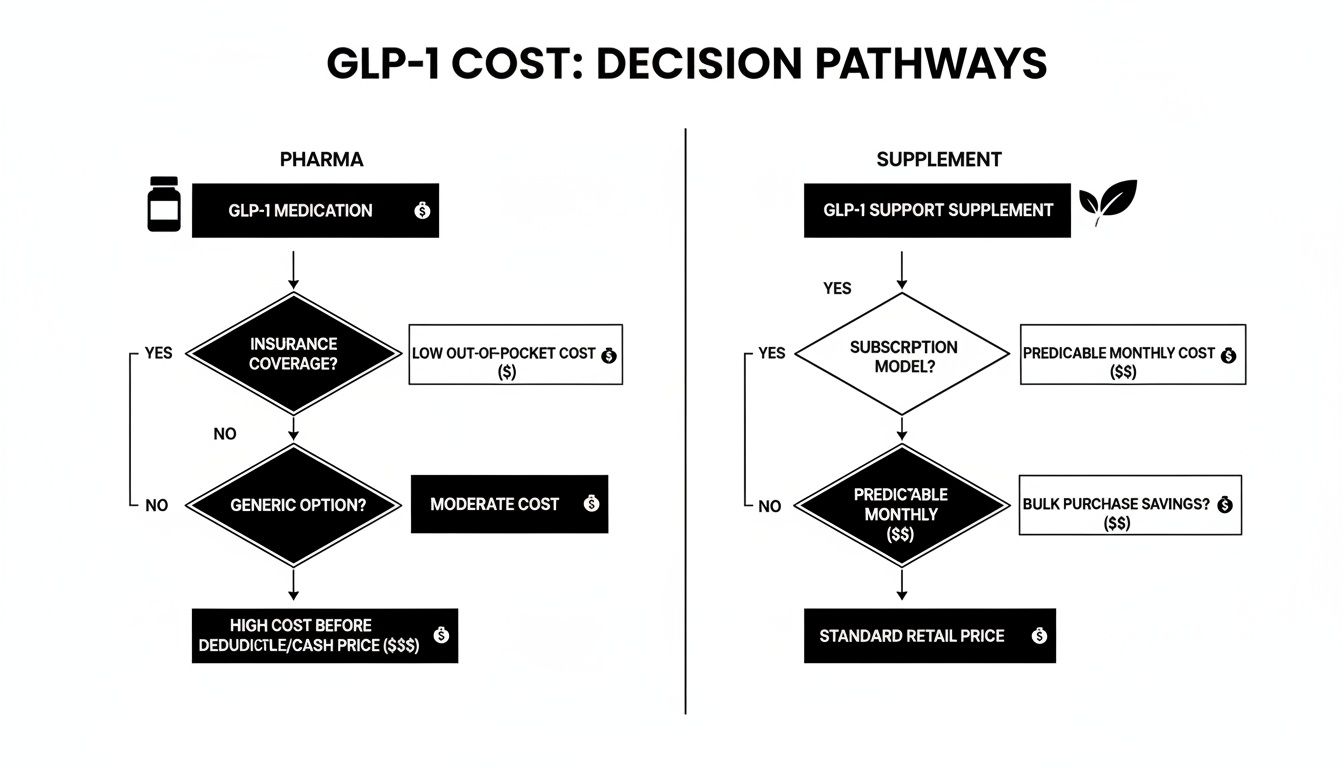
While pharmaceuticals offer a direct, potent effect, they come with medical and financial hurdles. Supplements, however, offer a much lower barrier to entry for anyone looking to support their metabolic health.
Investing in Sustainable Health Habits
Choosing a supplement over a prescription isn’t just about saving money—it’s a different approach to health altogether. Supplements are meant to support and amplify the effects of good lifestyle habits, not to replace them. Their lower cost makes them a practical piece of a bigger, more sustainable wellness plan.
Let’s break down a potential monthly investment:
- Prescription GLP-1: $1,300 (average uninsured cost)
- High-Quality Supplement: $50
- Gym Membership: $40
- Increased Budget for Whole Foods: $200
For less than a quarter of what the medication alone costs, you could build a complete wellness system. This system could include a supportive supplement, consistent training, and a nutrient-dense diet. This mindset empowers you to create habits that pay off for years to come, making every dollar you invest work harder for your total well-being.
How to Choose a High-Quality GLP-1 Supplement
The supplement market is flooded with products trying to ride the GLP-1 wave. Trying to find a top rated GLP-1 supplement that actually delivers can feel like searching for a needle in a haystack.
The reality is that most of these products are built on hype and flashy marketing, not solid science. This guide will give you a practical, no-nonsense checklist to cut through the noise. You'll learn how to vet products so you can invest in a supplement that’s safe, transparently dosed, and genuinely supports your metabolic goals.
Analyze the Supplement Facts Panel
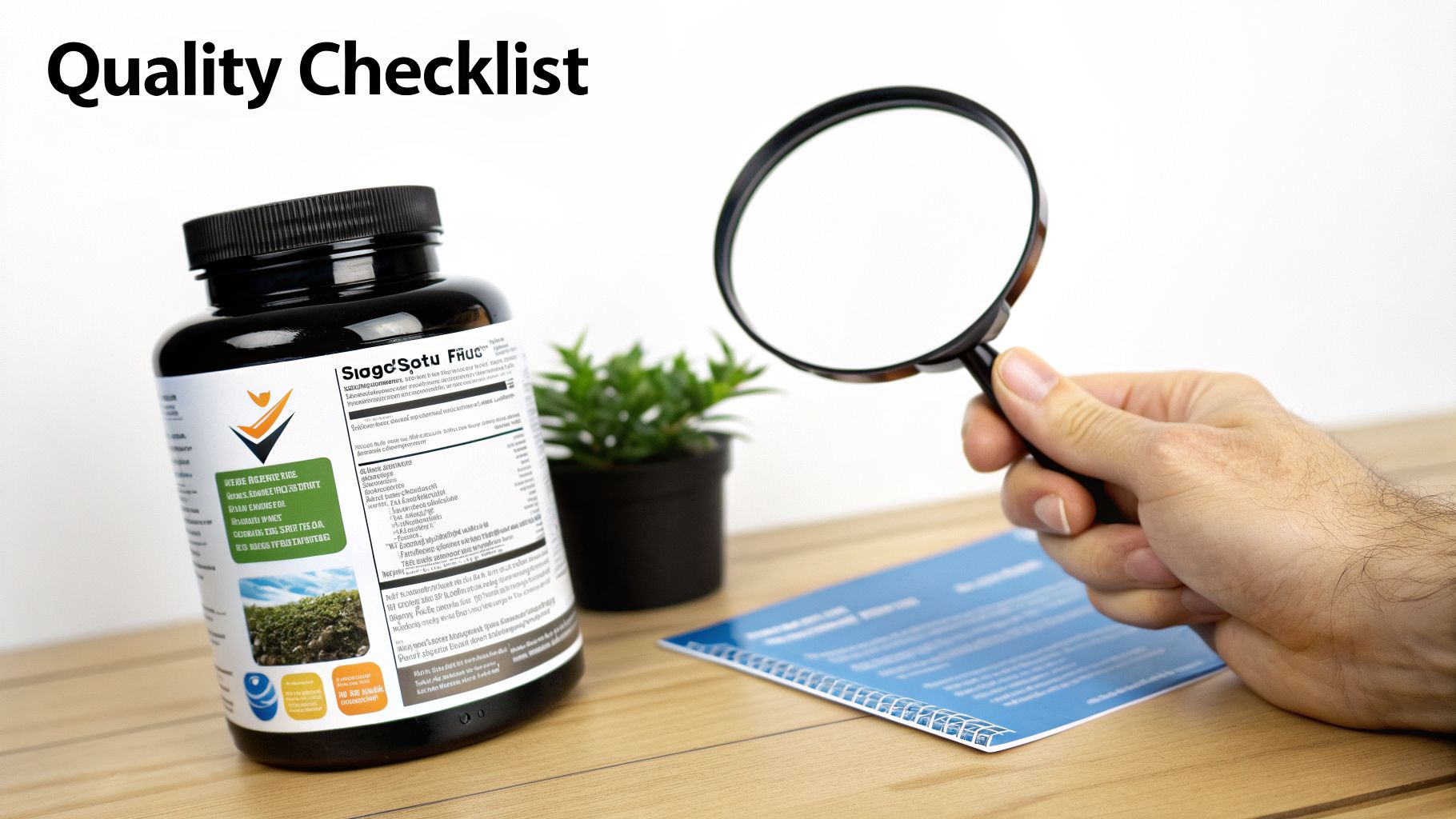
Your most powerful tool is the Supplement Facts panel on the back of the bottle. This is where the truth lies. Forget the promises on the front of the label and turn the bottle around immediately.
A quality product will list every single ingredient with its precise dosage, usually in milligrams (mg) or grams (g). If a supplement contains berberine, for example, the label should clearly state something like "Berberine HCl: 500 mg" per serving.
Be skeptical of ingredients listed without a specific amount. This lack of transparency is a huge red flag—it often means the dose is too small to have any real effect.
Watch Out for Proprietary Blends
One of the supplement industry's worst-kept secrets is the "proprietary blend." This is a massive red flag. It’s a legal loophole that lets manufacturers group a bunch of ingredients together under one total weight, hiding the specific dose of each one.
For example, a label might list a "Metabolic Support Blend: 1,200 mg" containing berberine, cinnamon, and green tea extract. You have zero idea if that blend is 99% cheap cinnamon or if it contains a clinically effective dose of the most important ingredient, berberine.
Companies use proprietary blends to hide weak, under-dosed formulas. If a brand is proud of its product, it will be transparent about what’s inside. When they hide the numbers, you have to ask yourself why.
A trustworthy brand will always choose full transparency. This practice is so common and deceptive that we created a full guide on the problems with proprietary blends in supplements.
Verify Third-Party Testing
The supplement industry isn't regulated like the pharmaceutical industry. The FDA doesn’t verify a supplement’s safety or effectiveness before it lands on shelves. This is why third-party testing is non-negotiable.
Independent labs test products to confirm that what’s on the label is actually what’s in the bottle. They also screen for harmful contaminants like heavy metals, pesticides, and microbes.
Look for seals from these respected organizations on the bottle or the company's website:
- NSF International (or NSF for Sport): One of the most rigorous and respected certification programs available.
- Informed-Sport / Informed-Choice: The gold standard for athletes, as they test every single batch for banned substances.
- USP (United States Pharmacopeia): Verifies a product's identity, purity, potency, and manufacturing quality.
A product without any third-party verification is a complete gamble. You're just taking the company's word for it, and that’s a risk not worth taking with your health.
Spotting Red Flags on a Supplement Label
Marketing claims can tell you a lot about a product's quality—or lack thereof. Companies hoping to make a quick buck on the latest trend often use over-the-top language that signals a subpar formula.
Here’s a quick-reference table to help you spot some of the most common red flags when searching for a top rated GLP-1 supplement.
| Red Flag | What It Means | What to Look For Instead |
|---|---|---|
| "Nature's Ozempic" | This is a false, illegal medical claim. No supplement can replicate the powerful effects of a prescription drug. | Honest language describing supportive benefits, like "aids in blood sugar management" or "promotes satiety." |
| "Secret Ingredient" | It's a marketing gimmick. Effective ingredients are well-researched and widely known, not secret. | Products that feature scientifically-backed ingredients like Berberine HCl, Inulin, or Glucomannan. |
| Rapid Weight Loss Claims | Any promise of losing "30 pounds in 30 days" is unrealistic, unsafe, and a classic sign of a scam. | Realistic expectations about gradual, supportive results that complement your diet and training. |
| No Third-Party Testing | The company is not willing to have its formula independently verified for purity, potency, and safety. | Clear certification logos from NSF, Informed-Sport, or USP displayed on the product or website. |
By using this four-step framework—checking the label, avoiding proprietary blends, demanding third-party testing, and seeing through the marketing hype—you can confidently choose a high-quality supplement that offers real, transparent value.
Optimizing Performance and Mitigating Risks
For any serious athlete or lifter, every change you make to your body—whether from training, diet, or supplements—requires a strategic approach. Messing with your metabolic pathways is no different. While some supplements can offer support, you need a data-driven plan to get the benefits while sidestepping the risks, especially when performance and body composition are on the line.
Most of the conversation around GLP-1 is about weight loss in the general public. For example, GLP-1 injectable use among US adults with diagnosed diabetes hit 26.5% in 2024, and public awareness is through the roof. But for a performance-focused individual, the goal isn't just weight loss; it's quality weight loss. You can see more on these trends in the latest findings from the CDC.
The Critical Risk of Muscle Loss
One of the biggest red flags with rapid weight loss—something often seen with powerful GLP-1 drugs—is losing lean muscle along with fat. When your body is in a massive calorie deficit, it can start cannibalizing muscle tissue for energy. For any athlete, that's a disaster.
Losing muscle means:
- Decreased Strength: Your numbers in the gym will tank.
- Slower Metabolism: Muscle is active tissue, and losing it drags down your resting metabolic rate.
- Higher Injury Risk: Muscle stabilizes and protects your joints.
Even if you're only using supportive supplements like berberine, which has a much milder effect, the principle is the same. If your appetite drops and you’re eating less, you have to be aggressive about protecting your hard-earned muscle.
Strategies to Protect Lean Muscle
Protecting muscle isn't a passive activity; it demands a targeted, proactive plan. Just "eating less" is a terrible strategy. Instead, you have to give your body the right signals to burn fat while holding onto lean mass.
1. Optimize Your Protein Intake
This is non-negotiable. When you're in a fat-loss phase, your protein needs actually go up. The standard recommendation of 1 gram per kilogram of body weight isn't enough for athletes.
For athletes trying to preserve muscle while cutting, a protein intake of 1.6 to 2.2 grams per kilogram of body weight is the gold standard. For a 200-pound (90 kg) person, that’s 144 to 198 grams of protein every day.
Focus on high-quality sources like whey, casein, eggs, and lean meats. If a suppressed appetite makes it tough to hit your numbers with whole food, a quality protein powder is an essential tool.
2. Prioritize Resistance Training
Cardio is great for creating a calorie deficit, but lifting weights is what tells your body to keep its muscle. Resistance training sends a powerful signal that your muscle is essential and shouldn't be broken down for fuel.
Stick with big, compound movements like squats, deadlifts, presses, and rows to stimulate the most muscle possible. Aim for at least 2-4 heavy lifting sessions per week, focusing on maintaining your strength.
Using Lab Data to Guide Your Strategy
Guesswork has no place in a serious athlete's toolkit. Objective data is the only real way to know if your plan is working. Before and during the use of any metabolic supplement, work with your doctor to run some key lab tests.
- Fasting Glucose and HbA1c: These give you a baseline and ongoing view of your blood sugar control.
- Lipid Panel: This tracks your cholesterol (LDL, HDL) and triglycerides, which can be influenced by ingredients like berberine.
- Comprehensive Metabolic Panel (CMP): This offers a broad look at your kidney and liver function, electrolytes, and protein levels.
Monitoring this data allows you to make informed adjustments instead of just guessing. Think of it like a GPS for your health—it shows you where you are and helps you chart the safest, most effective course. When you combine this blood work with regular body composition analysis (like DEXA scans), you get a complete picture of your progress, ensuring you're losing fat, not muscle.
Your Questions on GLP-1 Supplements Answered
The buzz around GLP-1 has made sorting through supplement claims more confusing than ever. In this section, we’ll answer the most common questions with direct, evidence-based answers to help you understand what GLP-1 support supplements can—and can’t—do.
Can a Supplement Really Mimic Ozempic?
The short answer is a definitive no. No over-the-counter supplement can replicate the direct, powerful action of a pharmaceutical drug like Ozempic or Wegovy. These are synthetic hormones designed to activate GLP-1 receptors in a way natural ingredients simply cannot.
Supplements work through entirely different, indirect pathways. An ingredient like berberine, for example, supports metabolism by activating an enzyme called AMPK, which helps improve insulin sensitivity. Viscous fibers work by slowing digestion to promote a feeling of fullness.
Think of it this way: a prescription drug is a high-speed express train, powerfully taking you to your destination. A supplement is more like a well-maintained bicycle path—it supports the journey and can help you get there, but it relies on your own power and works at a much different pace.
What Is the Best Single Ingredient GLP-1 Supplement?
There is no single “best” ingredient because the right choice depends entirely on your specific health goals. Different compounds are better at different tasks, so you should match the ingredient to the outcome you want.
Here’s a simple breakdown to guide you:
- For Blood Sugar and Metabolic Support: Berberine has the most robust scientific backing. Research consistently shows it can significantly help improve insulin sensitivity and support healthy blood glucose levels.
- For Appetite Control and Fullness: Viscous soluble fibers like glucomannan and psyllium husk are the clear winners here. They absorb water to form a gel in your stomach, which physically slows down digestion and helps you feel full for longer.
- For Gut Health Support: Prebiotic fibers like inulin feed the beneficial bacteria in your gut. A healthy microbiome is linked to your body's own natural production of GLP-1, making this a supportive, long-term strategy.
Ultimately, no single ingredient is a magic pill. The most effective approach always combines targeted supplementation with a healthy diet and consistent exercise.
Are GLP-1 Supplements Safe?
For the most part, the common ingredients found in GLP-1 support supplements are considered safe for healthy adults when used as directed. Ingredients like berberine, various fibers, and cinnamon have been used for years and are generally well-tolerated.
However, "safe" doesn't mean "free of side effects." Berberine, for instance, can cause gastrointestinal upset like cramping or diarrhea, especially at higher doses. It's also known to interact with certain medications, including blood thinners and drugs broken down by the liver.
This makes two things absolutely critical:
- Start with a low dose to assess your tolerance before increasing to the full recommended amount.
- Consult your healthcare provider before starting any new supplement. This is non-negotiable if you have pre-existing health conditions or take any prescription medications.
How Long Until I See Results from Supplements?
Patience is key. Unlike fast-acting pharmaceuticals that can produce noticeable effects within days or weeks, natural supplements work gradually to support your body's systems. You are not going to feel a dramatic shift overnight.
For an ingredient like berberine, you may need to take it consistently for at least 8 to 12 weeks to see measurable changes in metabolic markers like fasting glucose or HbA1c. With fiber supplements for appetite control, the effect on fullness is more immediate, but the impact on weight management is the long-term result of consistently eating less.
Think of supplements as part of a marathon, not a sprint. They work best when integrated into a sustainable lifestyle that includes a balanced diet and regular physical activity, reinforcing your healthy habits over months, not weeks.
At RxGainz, we are committed to providing evidence-based information to help you make informed decisions about your health and performance. We believe in transparency, quality, and real-world results. To continue learning and cut through the industry hype, explore more of our guides and resources at https://rxgainz.com.
