



Most advice on supplements to make my muscles harder starts in the wrong place. It starts with a shopping list. That framing is backward.
“Hard” isn't a supplement effect. It's a visual and tactile outcome created by a mix of muscle size, training status, body fat level, and water distribution. That's why people can spend money on flashy formulas and still look soft. The products weren't necessarily useless. They were aimed at the wrong target.
The smarter approach is to separate supplements by what they do. Some help you train hard enough to build more muscle. Some help you eat enough protein to keep that muscle. A smaller group only matters if you're deficient. And none of them, by themselves, can replace the basics that make a physique look dense and defined.
Table of Contents
- What 'Harder Muscles' Really Means
- The Foundation Tier Creatine and Protein
- Smart Dosing and Timing for Real Results
- Conditional Support When to Add Micronutrients
- How to Read a Supplement Label Like a Pro
- The Food-First Approach to Muscle Hardness
- Frequently Asked Questions
What 'Harder Muscles' Really Means
The phrase sounds simple, but it hides a lot of confusion. Individuals who search for supplements to make my muscles harder aren't asking for a compound that changes the physical texture of muscle tissue overnight. They're usually chasing a look.
Hardness is not the same as size
A bigger muscle can still look soft. A leaner, well-trained muscle with less fat and less subcutaneous water over it usually looks harder, even if it isn't dramatically larger.
That distinction matters because the evidence-backed supplements work through specific mechanisms. Some improve training output. Some support muscle protein synthesis. But the feeling of “hardness” is more closely tied to lower subcutaneous water and fat plus training state, not a single supplement, as noted in this GoodRx review of muscle recovery supplements.
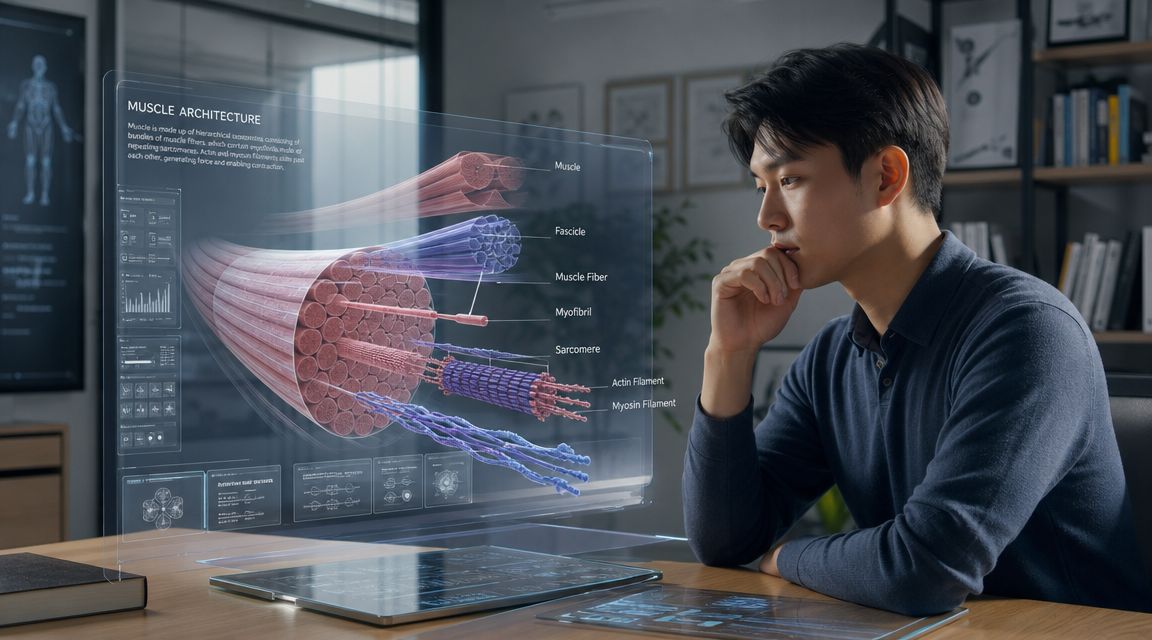
If your goal is a denser, more compact appearance, your training has to produce enough muscle in the first place. A useful starting point is understanding how hypertrophy works in practice.
The three traits people usually mean
When gym-goers say they want harder muscles, they usually mean three things at once:
- More muscle density: You need enough well-trained muscle tissue to create a firm look.
- Lower body fat over the muscle: Even solid muscle looks blurred when it sits under a thicker layer of fat.
- Less subcutaneous water retention: Water under the skin can soften definition, even when muscle size is improving.
Hardness is a body-composition outcome, not a special effect from a pre-workout.
Creatine often gets misunderstood. Creatine can make muscles look fuller because it increases intramuscular water, but “fuller” and “harder” aren't identical. Fuller can be useful. It can improve appearance and training performance. It just shouldn't be sold as magic dryness in a scoop.
That framing changes how you evaluate supplements. Instead of asking, “What pill hardens muscle?” ask better questions: Does this improve training quality? Does it help me keep protein intake high enough? Does it fix a real deficiency? If the answer is no, it probably won't move the needle much.
The Foundation Tier Creatine and Protein
The supplement market treats "hardness" like a special category. In practice, two products do most of the useful work because they support the two inputs that change how muscle looks over time. Training quality and sufficient protein intake.
That is why creatine monohydrate and protein powder sit in the foundation tier. They do not directly create a dry, granite-like look. They help build and retain the muscle that looks denser once body fat is lower and day-to-day water balance is under control.
Why creatine stays near the top
Creatine monohydrate has one of the strongest research bases in sports nutrition. Harvard's Nutrition Source describes it as one of the best-studied workout supplements and explains that it raises muscle creatine stores, which can support gains in lean mass and performance in resistance training. Their overview of workout supplements is a useful summary of that evidence.
The mechanism matters here. Creatine increases phosphocreatine availability inside muscle, which helps replenish ATP during repeated high-effort work. For a lifter, that usually shows up as slightly better repeat performance across hard sets. More quality reps and a bit more training volume, repeated over months, is what makes creatine relevant to muscle appearance.
A practical explanation of creatine monohydrate basics can help if you want the physiology in plain language.
One nuance gets missed. Creatine often makes muscle look fuller because it increases intracellular water. That can improve how a physique looks, but fullness is not the same thing as "hardness" as the term is commonly understood.
Useful filter: If a supplement does not improve training output, help you reach protein targets, or correct a real deficiency, its effect on muscle appearance is usually small.
Why protein belongs beside it
Protein powder earns its spot for a simpler reason. It makes adequate daily protein intake easier to hit with less friction.
That sounds ordinary because it is ordinary. But from a body-composition standpoint, ordinary habits drive most outcomes. If you are trying to look harder, preserving or adding lean mass is one of the few changes that consistently improves the look of a physique. Protein powder helps when whole-food intake falls short, appetite is low, meal prep is inconsistent, or convenience is the main barrier.
This also explains why complete protein usually beats niche amino products in practice. A whey or blended protein supplement delivers the full set of essential amino acids in amounts that make it easier to support muscle protein synthesis across the day. By contrast, BCAA products supply only part of the signal. If total protein intake is already adequate, they usually add little.
The practical conclusion is not flashy. If your budget is limited, buy the supplement that helps you reliably reach your daily protein target before paying extra for a "hardening" amino formula.
Tier 1 Supplements for Muscle Appearance
| Supplement | Primary Mechanism | Effect on 'Hardness' | Effect on 'Size/Fullness' |
|---|---|---|---|
| Creatine monohydrate | Increases phosphocreatine availability to support rapid ATP resynthesis during high-intensity lifting | Indirect. Helps by improving training output, but often makes muscles look fuller rather than mechanically harder | Strong effect on fullness and performance support |
| Protein powder | Helps you reach sufficient protein intake to support muscle protein synthesis and lean mass retention | Indirect. Supports a denser look over time by helping preserve or build muscle | Supports muscle gain when total intake would otherwise fall short |
These two are not interchangeable.
Creatine supports better work in the gym. Protein supports adaptation to that work. If you are building a stack from scratch, start there and treat everything else as optional until these bases are covered.
Smart Dosing and Timing for Real Results
Supplements work best when they become boring. The less drama around dosing and timing, the better your adherence usually is.
Start with the simplest plan you can repeat every day. Then keep it long enough for training and nutrition to do their job.
A simple creatine plan
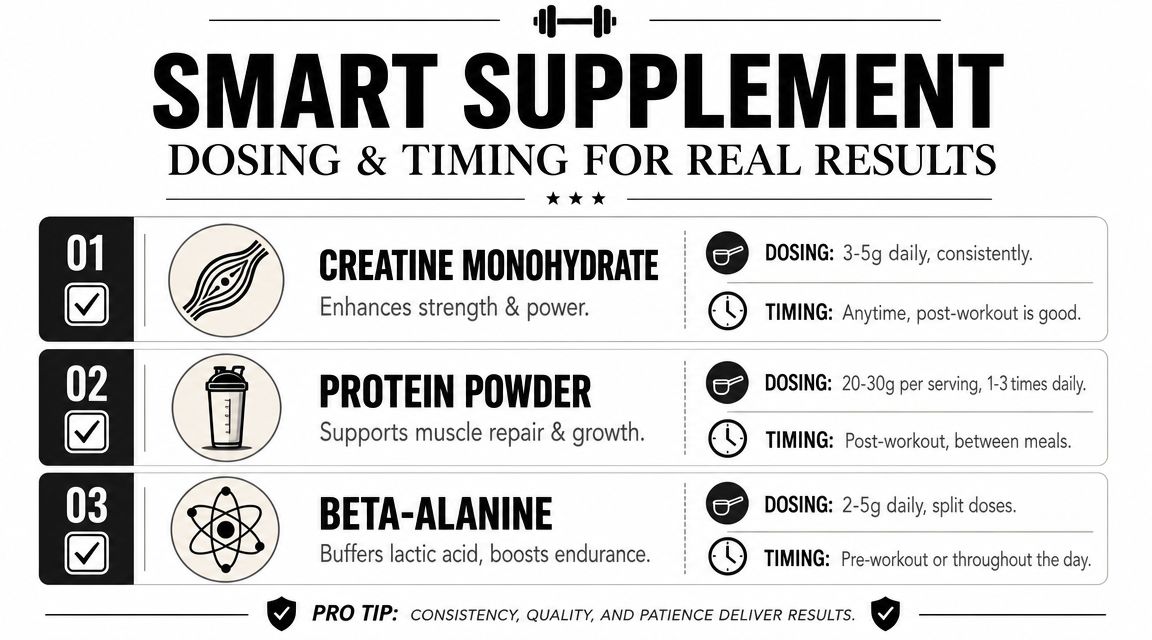
A common evidence-based protocol is 3 to 5 g per day for maintenance. An optional loading phase of about 0.3 g/kg/day for at least 3 days can saturate muscle faster. Medical News Today also notes that studies have shown about an 8% increase in one-rep-max strength compared with placebo in the research it discusses on creatine dosing and performance.
That gives you two workable options:
- Keep it simple: Take creatine daily at a maintenance dose.
- Load if you want faster saturation: Use the loading phase, then switch to maintenance.
- Prioritize consistency over timing: Post-workout is fine, but the main variable is whether you take it regularly.
For a broader beginner-friendly explanation, see this guide to creatine basics and daily use.
A quick visual summary helps if you like checklists before changing your routine.
How to use protein powder without overthinking it
Protein timing matters less than many people think. Use powder when it solves a real problem, such as low appetite after training, busy workdays, or difficulty building protein-rich meals.
A practical approach looks like this:
- After training: A shake can be convenient when you don't want a full meal.
- Between meals: Use it to close gaps in intake instead of grazing on low-protein snacks.
- With breakfast: Helpful if your mornings are carb-heavy and protein-light.
You don't need a complicated anabolic window mindset. You need repeatable intake.
A practical daily setup
Here's a simple example framework:
- Morning: Take creatine with breakfast or coffee if that helps you remember.
- Post-workout: Use protein powder when a full meal isn't practical.
- Later meals: Fill the rest of your intake with regular food.
Most supplement plans fail because people chase perfect timing and miss the bigger target, which is daily consistency.
If you're comparing products, boring wins. Plain creatine monohydrate. Straightforward protein powder. Transparent labels. No need to stack five “hardening” agents before you've nailed the basics.
Conditional Support When to Add Micronutrients
Supplement marketing often gets sloppy. Zinc, magnesium, and vitamin D often get packaged as universal muscle builders. The evidence doesn't support that broad claim.
The more accurate view is narrower and more useful. These micronutrients can matter when they correct a real deficiency. If you already have adequate intake, the payoff for muscle mass is unlikely to be meaningful.
Who actually benefits
A review indexed on PubMed regarding supplements promoted for muscle mass supports a cautious approach. Many “muscle-supportive” supplements have little or no supporting data, and common micronutrient add-ons tend to make the most sense when they fix an existing deficiency.
That changes how you should think about them:
- Vitamin D: Potentially relevant if you're low, especially if bloodwork confirms it.
- Magnesium: More of a recovery and general function support play than a direct “hardness” supplement.
- Zinc: Worth considering when intake is low or deficiency is suspected, not as a default testosterone shortcut.
A practical overview of vitamin D and K2 considerations can help if that's the specific rabbit hole you're in.
How to decide before buying
The right question isn't “What should I add next?” It's “What problem am I solving?”
Use a simple decision filter:
| Situation | Best interpretation |
|---|---|
| You eat a limited diet or have known low intake | Micronutrient support may be reasonable |
| You have symptoms and confirm low status with testing | Targeted supplementation makes sense |
| Your diet is already solid and labs are normal | Extra pills probably won't harden your physique |
Buy micronutrients to correct a shortage, not to create a fantasy effect.
This matters financially as much as physiologically. Many lifters end up with a cabinet full of “support” products that do very little because the underlying issue was training quality, calorie control, or inconsistent protein intake.
If your muscles look flat or soft, don't assume a mineral stack is the answer. Sometimes the answer is simpler. You need better food structure, better training execution, or lower body fat.
How to Read a Supplement Label Like a Pro
A label does not tell you whether a product is exciting. It tells you whether the product is clear, dosed accurately, and worth comparing against simpler options.
That matters more than branding in a category built around appearance goals. If “muscle hardness” really means better muscle fullness, lower body fat, and less avoidable water retention, then a useful supplement should match one of those jobs. The label is where you verify that match.
What a good label looks like
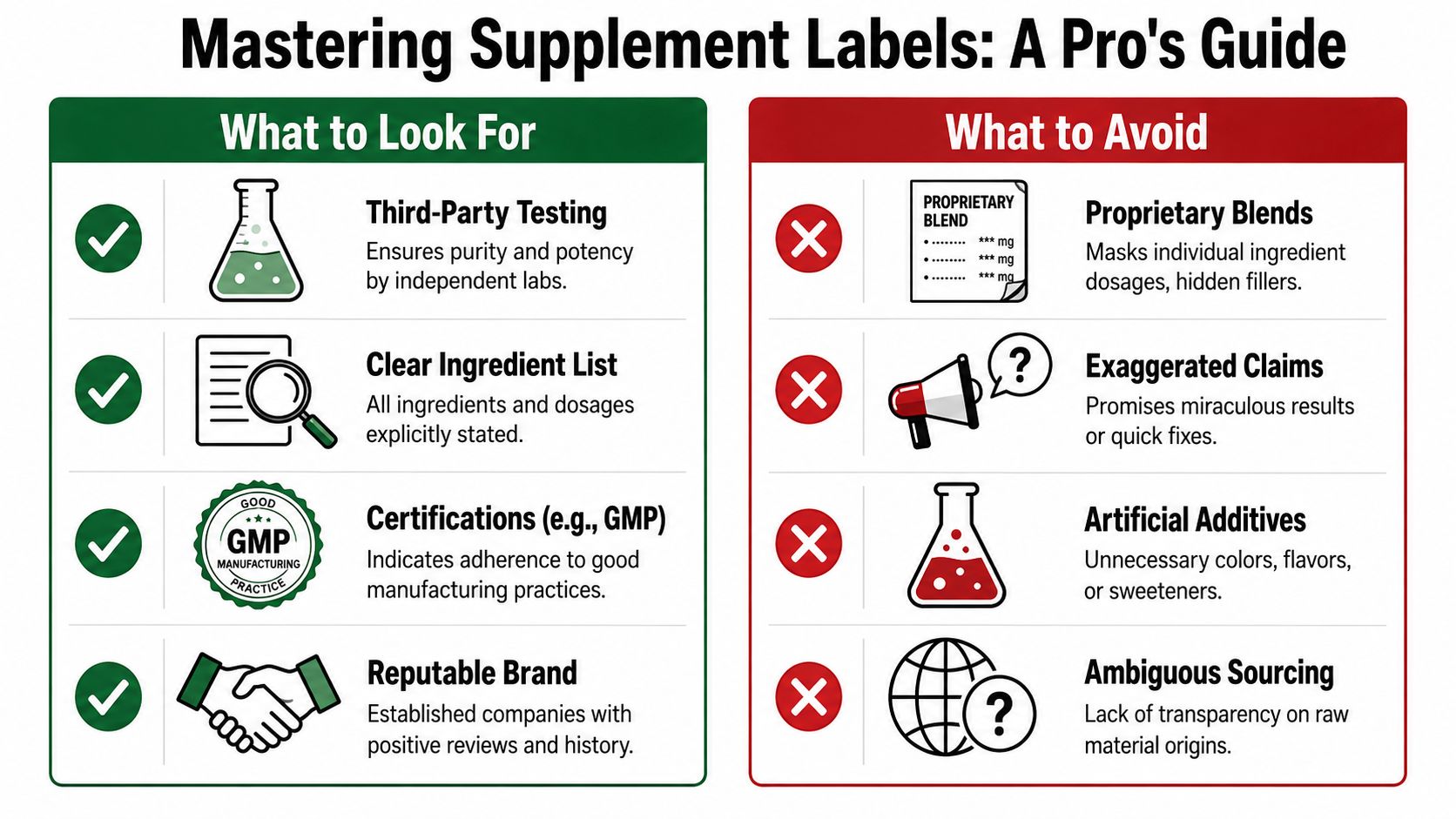
A credible label usually has four features:
- Full dose transparency: Each active ingredient is listed with the exact amount, not buried inside a blend.
- A formula built around one clear purpose: Protein powder should mostly be protein. Creatine should clearly state the creatine form and dose. A “hardening” product with stimulants, herbs, amino acids, and minerals mixed together often signals sloppy product design.
- Quality control markers: Third-party testing, NSF Certified for Sport, Informed Choice, or clear manufacturing information improve confidence that the product contains what the label claims.
- Ingredients that fit the outcome: If the goal is muscle support, complete protein and creatine make more sense than a long list of pixie-dosed extras.
For a more detailed screening process, use this guide on how to tell if a supplement is legit.
What a bad label usually hides
The biggest red flag is still the proprietary blend. It prevents you from checking whether the useful ingredient is included in a meaningful amount.
Amino formulas are a common example. A label may spotlight BCAAs, EAA blends, or “anabolic matrix” language, while the practical question is much simpler: does this product do anything you are not already getting from adequate daily protein? As noted earlier, complete protein usually wins that comparison. If a formula avoids stating clear doses and leans on amino buzzwords, treat it as a marketing product until proven otherwise.
Use this quick audit before you buy:
- Start with the primary active. If the product claims to support strength, recovery, fullness, or muscle retention, the main ingredient and its dose should be easy to find.
- Check serving size against the tub size. Some labels look impressive until you notice the effective dose requires multiple scoops and the container only lasts a week or two.
- Separate actives from decoration. Small amounts of electrolytes, digestive enzymes, or plant extracts may be fine, but they should not distract from an underdosed core formula.
- Match the label to the intended goal. A protein powder supports total protein intake. Creatine supports training performance and lean mass. Neither directly “hardens” muscle in the way ads imply. They support the underlying physiology.
- Watch for overlap. If you already use whey and creatine separately, a blend product may just repackage the same ingredients at a higher cost.
Short ingredient lists often age better than flashy formulas.
A good label reduces uncertainty and makes comparison easy. A weak label asks you to trust adjectives. In supplements, that is rarely a smart trade.
The Food-First Approach to Muscle Hardness
If your diet is poorly structured, supplements can only decorate the problem. The harder look many individuals seek comes from building enough muscle, keeping body fat under control, and avoiding day-to-day nutrition habits that leave them puffy, under-recovered, or under-muscled.
Build the look from meals, not marketing
Food does the heavy lifting because it controls the three variables that define the look.
First, you need regular servings of high-quality protein from meals you can sustain. Chicken breast, Greek yogurt, eggs, fish, lean beef, tofu, and cottage cheese all work because they help support muscle retention and growth without forcing you to rely on powder for every feeding.
Second, you need calorie control if body fat is hiding the muscle you've built. No “hardening” capsule can overcome a diet that consistently overshoots your needs.
A harder physique usually comes from better body composition, not a more exotic supplement stack.
Food choices that support a harder look
Use food to support the appearance you want:
- Lean proteins: These make it easier to keep protein high without pushing calories up too fast.
- Fibrous vegetables and fruit: They improve meal quality and satiety, which helps when fat loss is part of the goal.
- Carbohydrates around training: Rice, oats, potatoes, fruit, and similar foods can support performance so your sessions stay productive.
- Consistent hydration: Erratic fluid intake can make day-to-day appearance more variable.
- Reasonable sodium and potassium intake: Extremes tend to create more confusion than benefit for recreational lifters.
A simple plate often beats a complicated stack. Protein source. Carbohydrate source. Vegetables. Enough fluids. Repeat that pattern across the week and your physique usually looks better before you add anything fancy.
The readers who get the best results from supplements usually already eat this way. That's not a coincidence. Supplements amplify a strong base. They rarely rescue a weak one.
Frequently Asked Questions
Do I need to cycle creatine
There is typically no need to cycle it. A steady daily approach is usually easier and more practical than rotating on and off. The bigger concern is whether you're taking it consistently enough for it to matter.
Can I take creatine and protein together
Yes. They do different jobs, so combining them is normal. Creatine supports high-intensity training output, while protein helps cover intake for recovery and muscle retention. Taking them in the same shake is mostly a convenience decision.
How long until I notice a difference
That depends on what you're looking for. Some people notice fuller muscles or bodyweight changes sooner, while visible changes in the mirror depend on training quality, food intake, and current body composition. If you're chasing a harder look, fat loss and muscle gain usually matter more than acute supplement effects.
Are BCAA products worth adding
Usually not if your total protein intake is already solid. Complete protein sources are generally the stronger buy. Many amino-heavy formulas sound advanced but don't clearly outperform a simpler protein strategy.
Should I buy zinc, magnesium, or vitamin D for a harder look
Only if you have a reason. If diet logs, symptoms, or bloodwork point to low intake or deficiency, targeted use can make sense. If everything is already adequate, they're unlikely to transform your physique.
What's the biggest mistake people make with supplements to make my muscles harder
They buy for the label claim instead of the mechanism. If a product doesn't clearly help training quality, protein intake, or deficiency correction, it usually belongs lower on the list.
If you want more no-hype guidance on supplements, training, recovery tools, and how to evaluate what's worth buying, RxGainz is a strong place to keep learning. The site does a good job translating research into practical decisions, especially if you care more about useful evidence than marketing claims.
