



Most muscle gain protein advice is backwards. It starts with powder tubs, shaker bottles, and a bigger daily number, as if muscle growth responds linearly to protein forever. It doesn't. A hard training stimulus drives the adaptation. Food supports it. Supplements make that easier. When athletes reverse that order, they usually end up overspending on convenience while underinvesting in the inputs that build muscle.
The more useful question isn't “How much protein can I force down?” It's “What amount is enough to support growth, and where do supplements earn their place?” The answer is more restrained than gym folklore suggests. There's a clear role for protein in hypertrophy, but there's also a clear point where adding more becomes less productive.
Table of Contents
- Beyond More Is Better The Truth About Protein
- The Pyramid of Muscle Gain Where Protein Fits
- Your Daily Protein Target For Building Muscle
- The Most Effective Muscle Gain Supplements
- Optimizing Protein Timing And Distribution
- A Checklist For Choosing Quality Protein
- Frequently Asked Questions About Muscle Gain Protein
- Do I need 1 gram of protein per pound of body weight to build muscle
- Is whey better than whole food for muscle gain
- Is post-workout protein mandatory
- Should I use casein before bed
- Can I build muscle with plant protein
- Are BCAAs worth buying if I already use protein powder
- What matters more for hypertrophy, supplements or meal consistency
- How many meals should I eat
- What is the best muscle gain protein powder
Beyond More Is Better The Truth About Protein
The biggest myth in muscle gain protein is that more protein always means more muscle. That idea survives because it's simple, marketable, and easy to repeat. It's also incomplete.
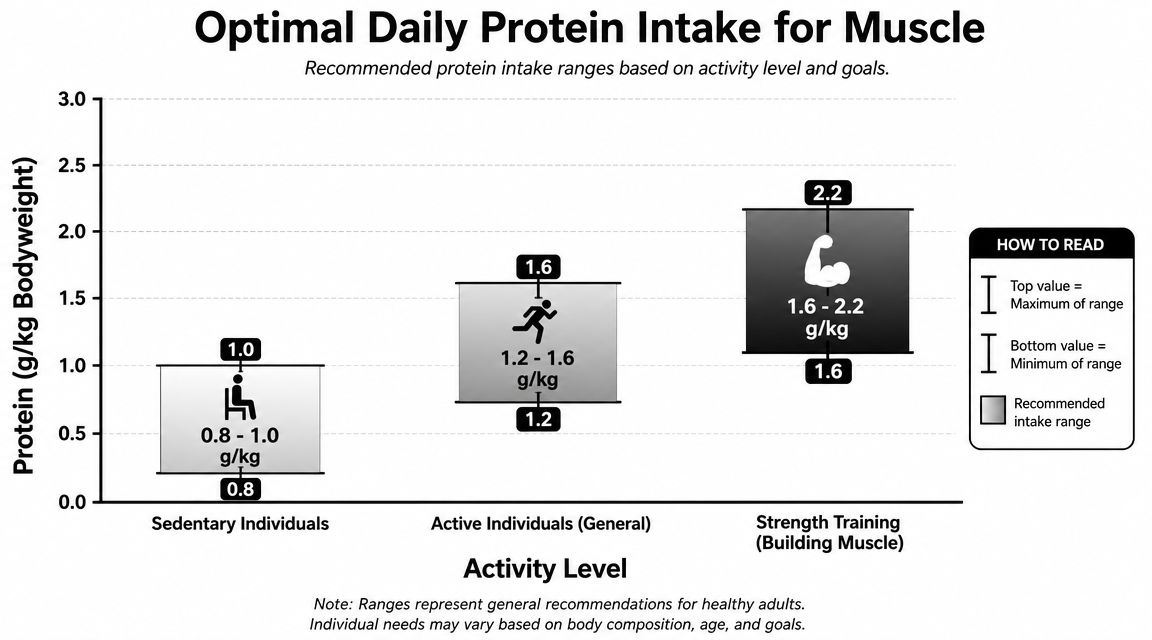
The evidence points to a practical plateau around 1.6 g/kg/day, with intakes above 2.2 g/kg/day showing minimal additional benefit for muscle growth itself, which directly challenges the common 1 gram per pound rule from gym culture (review summary on protein intake and diminishing returns). That doesn't mean protein stops mattering. It means the return on each extra gram gets smaller once you've already covered the requirement that supports hypertrophy.
What this changes for athletes
If you're missing your target badly, adding protein helps. If you're already eating enough, adding still more usually doesn't create a second wave of muscle growth. That distinction matters because many athletes confuse importance with infinite scalability. Protein is essential, but it isn't the main switch for muscle gain.
Practical rule: Treat protein like a threshold variable first, not a “more is always better” variable.
Often, supplement marketing outruns physiology. A protein powder can help you hit a target. It can't compensate for weak programming, inconsistent training effort, or a diet that doesn't support recovery. That's why two lifters can drink the same shake and get very different outcomes.
The smarter way to think about protein
A dedicated athlete should think in layers:
- First, create demand for growth. Resistance training gives muscle a reason to adapt.
- Then, supply enough raw material. Daily protein intake supports repair and remodeling.
- Then, refine execution. Meal distribution, food choice, and supplement convenience improve consistency.
That framework is less exciting than “eat huge and grow,” but it's more accurate. It also saves you from chasing ever-higher intake numbers when the limiting factor is elsewhere.
The athlete who hits a realistic protein target every day and trains hard will usually outperform the athlete who obsesses over excess grams and misses sessions.
The Pyramid of Muscle Gain Where Protein Fits
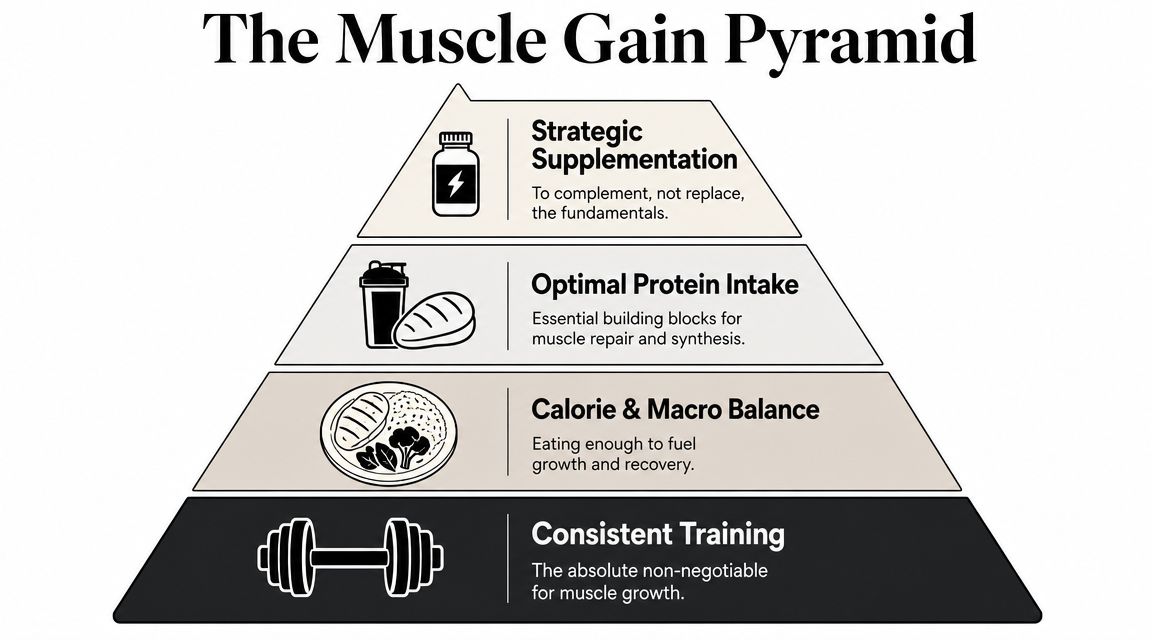
Muscle gain doesn't happen because you bought the right supplement stack. It happens when the basics are handled in the right order. The cleanest way to organize that is a pyramid.
Training creates the signal
The base of the pyramid is consistent resistance training. Without it, protein is just dietary protein. Muscle tissue grows when the body gets a repeated reason to adapt to tension, effort, and progressive overload. If training quality is poor, nutrition can only preserve so much value.
A lot of athletes overrate nutritional precision and underrate training execution. They'll compare isolate versus concentrate while ignoring whether they're progressing loads, reps, or total training quality. That's backwards.
Food does the heavy lifting before supplements do
The second layer is overall nutrition. That includes eating enough to support recovery, building meals around protein-rich foods, and avoiding a pattern where supplements replace basic diet quality. Whole-food eating tends to solve multiple problems at once. It helps with satiety, meal structure, micronutrient intake, and adherence.
The third layer is optimal protein intake, which sits above general nutrition but below supplements. Protein matters a lot, but it doesn't sit at the base because training remains the essential driver. If you want a broader grounding in the food-first side of performance nutrition, Protein 101 at RxGainz is a useful primer.
Below that top layer sits the most misunderstood category in sports nutrition: strategic supplementation.
| Pyramid level | What it does | Why it ranks there |
|---|---|---|
| Consistent Training | Creates the growth signal | No training, no hypertrophy |
| Calorie & Macro Balance | Supports recovery and energy needs | Poor intake limits adaptation |
| Optimal Protein Intake | Provides building blocks for muscle repair | Important, but not the first lever |
| Strategic Supplementation | Adds convenience and targeted support | Useful only when the lower levels are in place |
Supplements belong at the top because they're multipliers, not foundations. Whey helps when whole-food meals are inconvenient. Casein helps when a slow-digesting protein feeding fits your schedule. Creatine helps performance. None of them can rescue a weak base.
That hierarchy also makes supplement decisions easier. If your progress is stalled, ask questions from the bottom up. Are you training hard enough? Are you eating enough? Are you reaching your protein target? Only after that should you ask whether a supplement meaningfully solves a real problem.
Your Daily Protein Target For Building Muscle
Protein targets get overstated because they are easy to market and easy to measure. Muscle gain is less convenient than that. Training creates the demand, total diet supports recovery, and protein covers one specific requirement within that system.
The number that matters most
For resistance-trained athletes, the practical target is usually 1.6 g/kg/day. That intake is well supported in the literature as a strong baseline for hypertrophy, while pushing far above it tends to produce smaller returns unless total energy intake, training quality, or body composition goals change. For an 80 kg lifter, that is 128 g of protein per day (systematic review and meta-analysis on protein supplementation during resistance training).
The useful conclusion is not that more protein is always better. It is that there is a floor you should reliably reach, and a ceiling where the payoff starts to shrink. That distinction matters because many lifters try to solve a training or calorie problem with another shake.
Here's a quick visual explainer before the practical math:
A simple way to calculate your target
Use your body weight in kilograms and multiply by a range that fits your context.
- For a clear muscle-gain target: use 1.6 g/kg/day
- For a reasonable upper range: use up to 2.2 g/kg/day
- For older lifters or athletes dieting hard: stay closer to the upper end if appetite, recovery, or meal size makes protein harder to distribute well
A range works better than chasing a perfect number. It gives you enough precision to plan meals without turning the rest of your diet into a protein-maximizing exercise.
| Body weight | Evidence-backed target | Upper practical range |
|---|---|---|
| 60 kg | 96 g/day | 132 g/day |
| 70 kg | 112 g/day | 154 g/day |
| 75 kg | 120 g/day | 165 g/day |
| 80 kg | 128 g/day | 176 g/day |
| 90 kg | 144 g/day | 198 g/day |
The strategic question is simple. Are you below the floor, within the useful range, or already pressing against diminishing returns?
If you are below the floor, protein deserves attention because it may be limiting progress. If you already land in the evidence-backed range, the next gain often comes from better programming, better energy intake, or better adherence. A high-protein diet built around real meals usually solves this more effectively than adding supplements by default.
Bottom line: Reach your daily minimum consistently. After that, expect smaller returns from adding more protein than from improving training quality, recovery, or calorie intake.
That is how protein should be viewed in a muscle-gain plan. It is a high-value input, but it is still one layer in a hierarchy.
The Most Effective Muscle Gain Supplements
Once your training and daily intake are in place, the supplement field gets much smaller. Most products marketed for hypertrophy are either redundant, overhyped, or solving a problem you don't have. The useful list is short.
Whey for convenience and post training use
Whey protein earns its place because it's efficient. It gives you a fast, portable way to reach your daily total when cooking or eating a full meal isn't realistic. That's why whey is often the default choice after training or during busy workdays.
For maximizing muscle protein synthesis after a workout, 20 to 40 grams of high-quality protein such as whey is a well-established benchmark, and larger single doses often increase amino-acid oxidation rather than generating a greater anabolic response (evidence summary on protein dose and muscle growth).
Whey is a tool, not a requirement. If you can eat a meal that delivers the same amount of protein soon after training, that works too. The value of whey is mostly convenience, consistency, and easy dose control.
Casein for slower digestion and pre sleep use
Casein fills a different role. It digests more slowly, which makes it useful when you want a protein feeding that lasts longer. The most practical example is pre-sleep intake. When dinner is light or your schedule creates a long overnight gap, casein can be a sensible fit.
The evidence base summarized in sports nutrition guidance supports 20 to 40 g of casein before bed as an effective option for overnight muscle protein synthesis, as noted in the same broader review area already discussed earlier. That doesn't make a bedtime shake mandatory. It makes it strategically useful for athletes who have trouble distributing intake well across the day.
If whey is the convenience protein, casein is the scheduling protein.
Creatine belongs in the conversation even though it is not protein
Creatine monohydrate isn't a protein supplement, but any honest discussion of muscle gain supplements should include it. Why? Because protein supports the building process, while creatine supports training performance and repeated high-effort output. Those are different jobs.
A lifter choosing between a flashy amino formula and creatine should almost always understand that creatine has the more defensible place in a muscle-gain stack. It doesn't replace protein intake. It helps you train in a way that makes protein more useful.
What to prioritize and what to ignore
Here's the shortlist.
| Supplement | Primary Mechanism | Evidence Strength | Typical Dose & Timing |
|---|---|---|---|
| Whey Protein | Helps reach daily protein targets with a fast-digesting source | Strong for practical use in meeting protein goals | Often useful post workout or anytime a meal is inconvenient |
| Casein Protein | Provides a slower-digesting protein option | Strong for specific use cases such as pre sleep feeding | Often used before bed or during long gaps without food |
| Creatine Monohydrate | Supports strength and training performance | Strong for performance and size support | Taken consistently on a daily basis |
What usually deserves less attention? Proprietary blends, hyper-specialized “anabolic” powders, and products built around ingredient mystique instead of dose clarity. If you want a broader breakdown of where protein powders and creatine sit in a bigger evidence-based stack, this muscle-building supplements guide covers that topic.
A good muscle gain protein supplement should solve a compliance problem. It should help you hit a target you'd otherwise miss. If it doesn't do that, it's probably optional.
Optimizing Protein Timing And Distribution
Timing matters less than many athletes think, but distribution matters more than many athletes practice. That's the distinction worth keeping.

The anabolic window is wider than marketing suggests
The old idea that you must consume protein in a tiny post-workout window is overstated. Total daily intake remains the first priority. But “timing doesn't matter at all” is also too simplistic.
Research summaries note that consuming about 20 to 40 g of protein per meal, ideally spaced every 3 to 4 hours, helps keep muscle protein synthesis sustained across the day, and one cited study found that muscle protein synthesis was about 25% greater when protein was spread evenly across meals rather than concentrated mostly later in the day (USADA summary on protein timing and meal distribution).
That finding matters because many athletes technically hit a good daily total while eating in a poor pattern. They undereat protein at breakfast, nibble at lunch, then cram most of it into dinner and a shake before bed. You can still make progress that way, but it isn't the most efficient setup.
How to spread intake across the day
A more effective pattern is boring in the best way. Build repeated feedings that each clear a useful threshold.
- Breakfast should count. A low-protein breakfast forces the rest of the day to do too much work.
- Anchor lunch and dinner. Each should contain a meaningful protein source, not just incidental grams from mixed foods.
- Use shakes strategically. Add whey when a meal falls short or your schedule compresses.
- Consider pre-sleep protein selectively. Casein makes the most sense when the overnight gap is long or dinner was light.
Athlete guidance often frames three to five protein feedings per day as a practical sweet spot, with per-meal targets around 0.3 g/kg and post-exercise intake around 20 to 25 g of high-quality protein, while 30 to 40 g before an overnight fast can support nocturnal synthesis, as summarized in sports nutrition material from the University of Toronto resource noted in the evidence base earlier.
Application: Don't chase the perfect minute. Chase repeated, adequate feedings across the day.
If your current routine is uneven, fixing distribution may improve your execution without increasing your total protein much at all. For athletes using shakes to smooth out those gaps, this whey protein guide can help clarify when whey is useful versus unnecessary.
A Checklist For Choosing Quality Protein
A protein powder is only useful if the label tells you what you're getting. Consequently, athletes get tripped up. They spend time comparing flavors and brand aesthetics while ignoring the details that determine whether a product can even deliver an effective dose.
What to inspect on the label
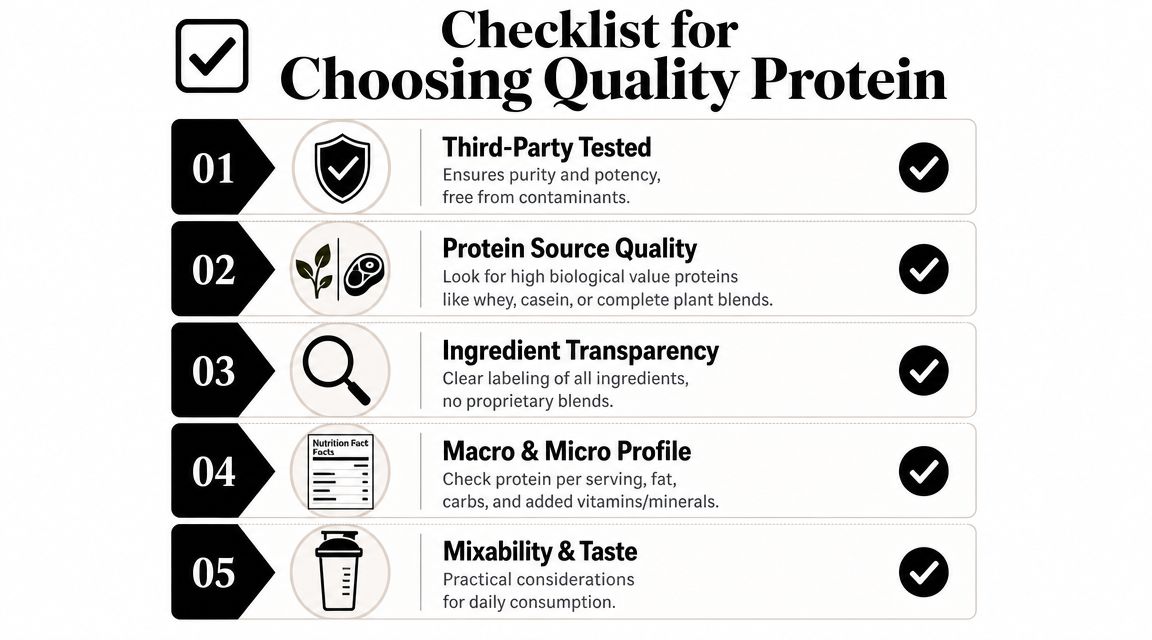
Knowing the precise dose of protein is critical. A supplement with a proprietary blend might not deliver the 20 to 40 grams of protein per serving needed to maximize muscle protein synthesis, which is why transparent labeling and third-party testing matter so much for serious athletes, as emphasized in the earlier evidence summary from USADA.
Use this checklist before you buy:
- Check the protein grams first. The serving should make it easy to reach a useful per-feeding dose.
- Prefer transparent labels. If a product hides amounts behind a blend name, you can't evaluate it properly.
- Look for third-party testing. Athletes need an extra layer of confidence for purity and label accuracy.
- Match the source to the job. Whey suits convenience and post-training use. Casein suits slower digestion. A complete plant blend can work if it fits your diet.
- Read the full macro profile. Some powders are mostly protein. Others bring enough carbs and fats to change how they fit your day.
Red flags that make a product easy to skip
Some labels tell you what not to buy almost immediately.
| Red flag | Why it matters |
|---|---|
| Proprietary blend language | Hides whether the dose is actually useful |
| No testing disclosure | Leaves more uncertainty around quality and accuracy |
| Tiny protein serving | Makes it harder to hit an effective per-meal target |
| Confusing ingredient list | Suggests marketing complexity instead of nutritional clarity |
The simple question is this: does the product clearly help you hit your daily and per-feeding target? If the answer is vague, move on. If you want a product category breakdown with that lens, this guide to protein for muscle gain reviews the main options.
A quality protein powder shouldn't require trust. It should require only basic label reading.
Frequently Asked Questions About Muscle Gain Protein
Do I need 1 gram of protein per pound of body weight to build muscle
Not necessarily. The evidence discussed earlier points to a practical ceiling where more isn't clearly better for muscle growth itself. Many athletes can build muscle effectively below that rule of thumb if training, total intake, and meal structure are in order.
Is whey better than whole food for muscle gain
No. Whey is usually better described as more convenient, not more anabolic than an equivalent protein dose from a solid meal. Whole foods often bring better satiety and meal quality. Whey makes target-hitting easier.
Is post-workout protein mandatory
It's useful, but not magical. If you train and then eat a solid protein-containing meal in a reasonable timeframe, that can work well. The strict “missed window” idea is overplayed.
Should I use casein before bed
Casein makes sense when your schedule leaves a long gap overnight or when dinner didn't provide much protein. If your total daily intake and distribution are already strong, it's an option, not a requirement.
Can I build muscle with plant protein
Yes, if your total intake is adequate and your protein sources are complete or combined well across the day. The physiology still comes back to training, total daily protein, and consistent execution.
Are BCAAs worth buying if I already use protein powder
Usually not. If you already consume enough high-quality protein, isolated amino add-ons often solve a problem that's already been solved by your base diet or shake.
What matters more for hypertrophy, supplements or meal consistency
Meal consistency beats supplement novelty. The athlete who repeatedly hits training sessions and a realistic protein target is in a stronger position than the athlete who rotates through expensive products without fixing daily habits.
How many meals should I eat
A practical structure is several protein-containing meals spread through the day rather than one or two heavily back-loaded feedings. The exact number can flex with your schedule as long as distribution stays reasonable.
What is the best muscle gain protein powder
There isn't one universal answer. The best choice is the one that clearly states the dose, fits your digestion and schedule, and helps you hit your target without unnecessary filler.
If you want evidence-based supplement breakdowns without hype, RxGainz publishes practical guides on protein, creatine, label quality, and performance tools so you can decide what deserves space in your routine.
