



You open a new tub, peel back the seal, and pause for half a second. The label looks right. The flavor name checks out. The powder smells normal enough. But if you're using protein to drive muscle gain, "probably fine" isn't a good standard.
The best protein for muscle gain isn't just the one with the best macro panel or the loudest marketing. It's the one that's authentic, accurately dosed, and clean enough to deserve a place in a serious nutrition plan. That matters because proper protein supplementation alongside resistance training can add about 0.5 to 0.7 kg of lean mass versus control conditions, according to a meta-analysis summarized here. If your tub is under-dosed, diluted, or counterfeit, you're not just wasting money. You're giving up results you could have earned.
Most lifters spend more time comparing flavors than verifying quality. That's backward. If you want the basics of protein needs nailed down first, review this primer on protein and performance. Then treat every supplement tub like a product that needs to earn your trust.
Table of Contents
- Why Your Protein's Purity Is Your Top Priority
- The First Line of Defense Inspecting Labels and Packaging
- Decoding Certifications and Certificates of Analysis
- Simple At-Home Tests to Check Your Protein
- When to Use Professional Lab Testing
- Reporting Fakes and Finding Trusted Sources
- Frequently Asked Questions
- Is whey always the best protein for muscle gain?
- Are marketplace reviews enough to judge a protein powder?
- What does a proprietary blend mean on a protein supplement?
- If a powder mixes poorly, is it definitely fake?
- Should I only buy products with third-party certification?
- Is whole food still the foundation if I use shakes every day?
Why Your Protein's Purity Is Your Top Priority
You finish a hard training block, hit your calories, and take your shake every day. Six weeks later, body weight is up, but performance and recovery are flat. Before blaming your program, check the tub. If the powder is under-dosed, amino-spiked, contaminated, or counterfeit, your numbers on paper stop matching what you are feeding your body.
Protein powder is useful because it makes intake easier to control. Athletes often use it to close the gap between what food provides and what training demands. The problem is simple. A label can look precise while the contents are anything but.
Poor purity creates three different problems at once:
- Performance risk: If a serving contains less protein than claimed, your daily intake target is off. That changes how much total protein you accumulate across the week.
- Health risk: Undeclared ingredients, contaminants, or allergen cross-contact can turn a routine supplement into a medical issue.
- Financial risk: A cheap filler sold as premium whey wastes money, and it can distort every diet adjustment you make afterward.
I treat purity as quality control, not marketing. The goal is not to find the product with the loudest claims about the best protein for muscle gain. The goal is to confirm that the powder in your scoop matches the label, batch after batch.
That changes how you evaluate supplements. You start with basic legitimacy checks, then review the paperwork behind the batch, then decide whether the product is credible enough to use or serious enough to send for lab testing. If you need a refresher on how protein fits into training outcomes in the first place, this guide on protein as the foundation of performance provides the bigger picture.
Practical rule: Treat your protein tub like any other piece of training equipment. If you cannot verify that it is safe and doing its job, it does not belong in your routine.
That mindset protects more than muscle gain. It protects decision-making. Every macro target, meal plan revision, and recovery strategy depends on the assumption that the label is telling the truth.
The First Line of Defense Inspecting Labels and Packaging
Most bad products identify themselves before you ever take a scoop. Packaging errors are common because counterfeiters copy the broad design, not the details.
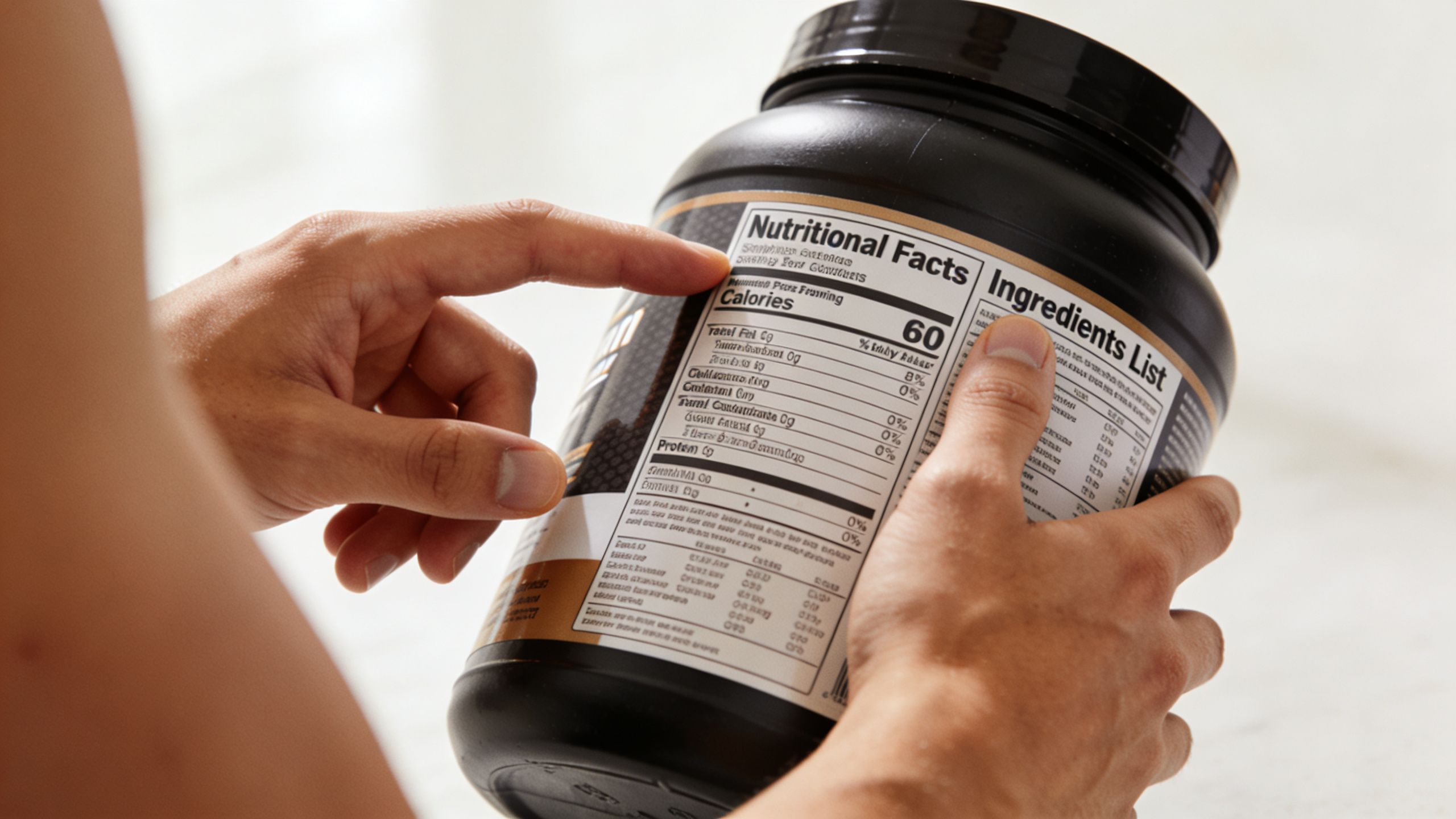
A physical inspection won't confirm purity, but it can filter out products that aren't worth another minute of your time. If you want a deeper framework for legitimacy checks across supplements, this guide on how to tell if a supplement is legit is useful background.
Start with the outside of the tub
Pick up the container and inspect it under normal light. Don't rush. Look for printing sharpness, alignment, color consistency, and tamper evidence.
Things I look at first:
- Seal integrity: An outer shrink band should sit evenly. An inner seal should look factory-applied, not wrinkled, loose, or reattached.
- Print quality: Brand colors should be consistent across the lid, side panel, and label wrap. Blurry text or washed-out graphics are bad signs.
- Label adhesion: Crooked placement, bubbling, peeling edges, or label overlap suggest a repackaged or low-control product.
- Lot and expiration details: These should be clearly printed, not smudged or stuck on as an afterthought.
- QR behavior: If a QR code exists, it should route to a relevant brand page or verification portal, not a generic homepage, broken page, or unrelated redirect.
Packaging fraud often shows up as small inconsistencies, not cartoonishly obvious errors. A fake may spell everything correctly and still be wrong. The lid texture feels slightly different. The scoop size doesn't match prior tubs. The powder fill level seems off relative to the container size.
Supplement Red Flag Checklist
| Red Flag | What It Might Mean | Action |
|---|---|---|
| Broken or uneven tamper seal | Product may have been opened or repackaged | Don't use it until the seller explains the seal issue |
| Blurry text or low-resolution graphics | Counterfeit label reproduction or poor manufacturing control | Compare with the official product images on the brand site |
| Brand colors look slightly off | Copycat packaging or old unauthorized inventory | Cross-check current packaging directly with the manufacturer |
| Lot number or expiration date is smudged | Weak traceability or relabeling | Contact the brand and ask them to verify the lot |
| QR code leads to a generic page | Fake verification element or lazy duplication | Avoid the product unless the brand confirms the code is valid |
| Lid, tub, or scoop feels different from prior purchases | Packaging substitution or product drift | Compare side by side with a known authentic tub if possible |
| Powder level seems unusually low or texture looks odd before first use | Shipping issue, tampering, or formula inconsistency | Photograph it immediately and contact the seller |
A quick side-by-side comparison helps. Put the suspect tub next to a version bought from a trusted retail channel. Differences in font spacing, matte versus gloss finish, lid ridges, or serving panel layout often stand out once both are in your hands.
If the packaging gives you two or three reasons to doubt it, don't talk yourself into trying "just one scoop."
Decoding Certifications and Certificates of Analysis
A polished label proves almost nothing. The documents behind the product matter more.
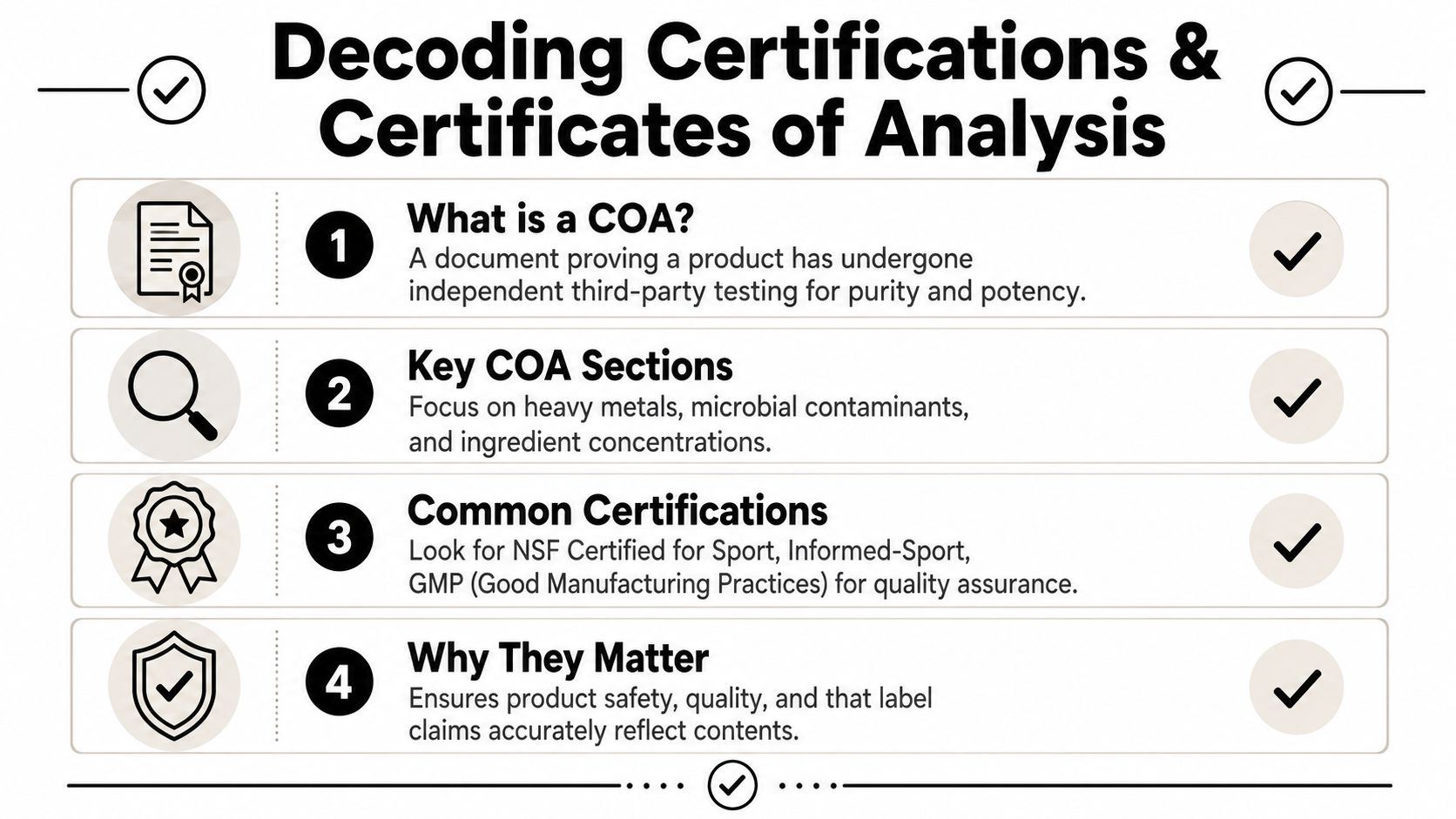
A Certificate of Analysis, or COA, is the most useful document a buyer can request when trying to verify whether a protein powder is real, correctly formulated, and acceptably clean. It won't make you a chemist, but it gives you objective points to inspect instead of relying on brand copy.
If you're weighing products specifically for hypertrophy outcomes, it's worth reading this broader guide on protein choices for muscle gain.
What a certification can and can't tell you
Third-party seals such as NSF Certified for Sport, Informed-Sport, and GMP claims can be useful signals. Still, the seal itself isn't enough. Verify the certification on the certifier's own database and make sure the exact product matches. Brand-level claims are weaker than product-level verification.
Certifications usually indicate that a product or facility met a stated standard. They don't replace a batch-specific COA. That's the distinction many buyers miss.
A batch-specific COA should match the product in your hand through identifiers such as lot number and date. If a company only shows a generic sample COA with no clear batch tie-in, treat it as marketing support, not proof.
How to read a COA without guessing
A useful COA has three parts that matter most for protein powder buyers.
- Identity
You should seek confirmation that the claimed protein source matches the label description. If you are paying for whey, that matters. A 2025 network meta-analysis found whey protein significantly outperformed placebo for fat-free mass gain with SMD 0.35, reported in this open-access review. If the product is partly filler or substituted with a cheaper ingredient, you're not buying what produced that outcome.
Purity
This section should report testing for contaminants such as heavy metals. You don't need to memorize lab ranges. You do need to see that the panel exists, the results are listed, and the document isn't vague.
Safety
A proper safety section includes microbiological results. Look for indicators tied to contamination control, not just a cheerful statement that the product "passed."
What a solid COA should include:
- Product identity details: Product name, flavor if relevant, lot number, and test date.
- Laboratory information: The lab name or at least clear evidence that testing was done by an independent third party.
- Measured results: Actual values or pass/fail entries tied to specific tests, not broad claims like "clean."
- Sign-off or authorization: A responsible reviewer, approval line, or release notation.
Checkpoint: If a company won't provide a current COA for the lot you're using, you're being asked to trust the label more than the evidence.
Simple At-Home Tests to Check Your Protein
At-home checks won't replace lab work, but they're useful for spotting products that don't behave like they should. A protein powder that fails in your kitchen rarely becomes more trustworthy in your bloodstream.
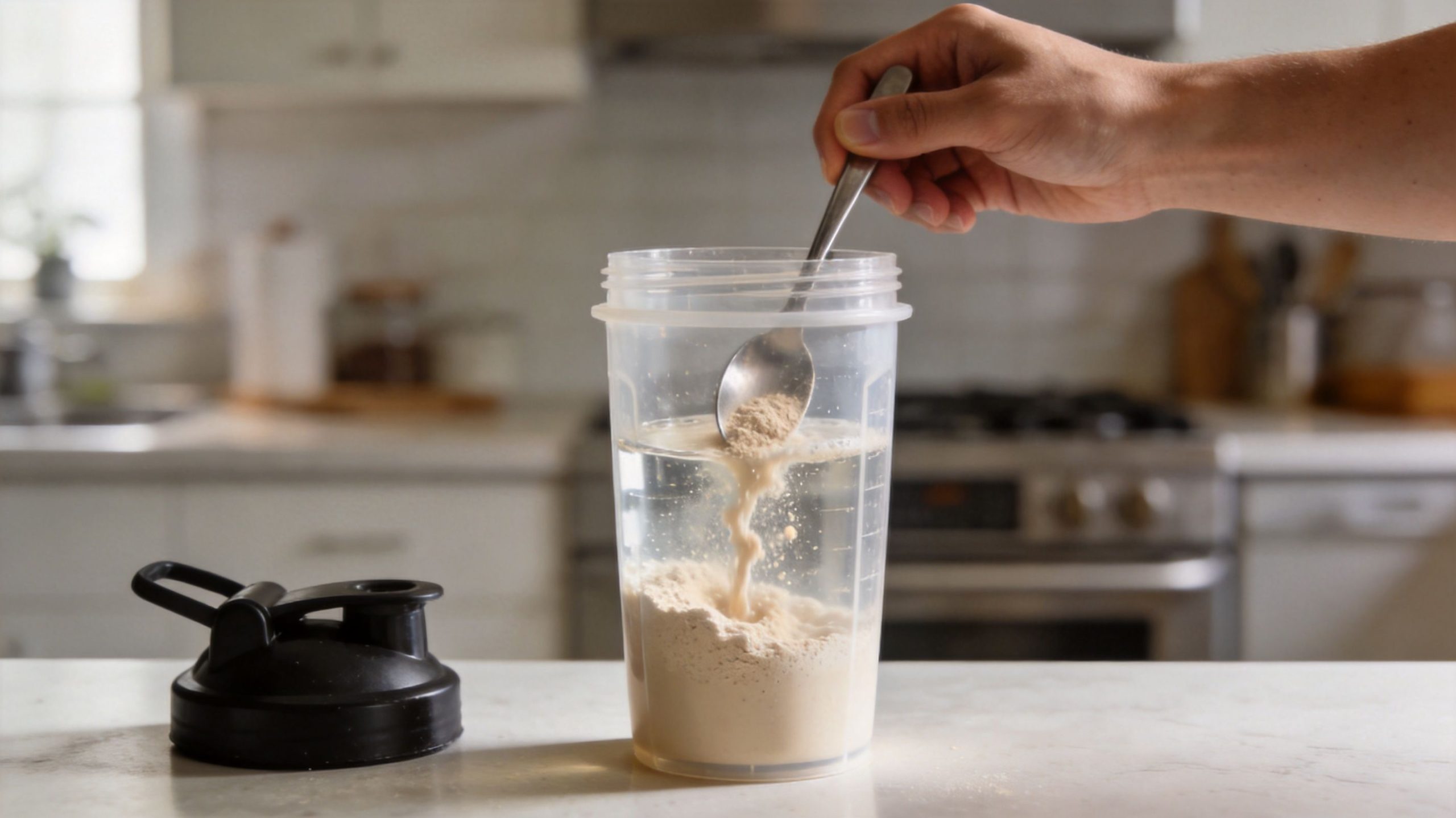
High-quality proteins such as whey isolate have superior bioavailability, and Harvard Health notes that poor mixability can be an indicator of lower-grade protein or undeclared fillers that compromise that benefit in its protein powder overview. If you want tools for deeper consumer testing comparisons, review these testing kit options.
Use your shaker before you trust the scoop
Run a controlled mixability check with plain water. Use the same bottle, same liquid amount, and same mixing method each time you compare products.
Watch for:
- Clumping that persists after shaking: Some powders foam or clump a bit. That's normal. Dense wet clumps that never break apart are more suspicious.
- Gritty residue on the tongue or bottle wall: This can suggest poorer processing or added bulk ingredients.
- Unusual settling: Fast separation doesn't automatically mean fraud, but odd sediment can be a clue.
- Abnormal foam behavior: Excessive foam that lingers can reflect formulation choices. It isn't proof of a fake, but it deserves attention if paired with other red flags.
Don't use one trait in isolation. A concentrate can mix differently than an isolate, and flavor systems change texture. What matters is whether the powder behaves like a professionally formulated supplement or like a loosely blended commodity mix.
What sensory checks can reveal
Smell the powder dry, then after mixing. Taste a small amount before committing to a full serving.
A normal product should smell and taste consistent with its ingredients and flavoring. A suspicious product often gives itself away with a harsh chemical note, a strange aftertaste, or a sweetness profile that feels disconnected from the label.
Use this quick sensory screen:
- Dry aroma: Should be recognizable and stable, not sharply solvent-like.
- Powder texture: Fine and uniform is typical. Damp pockets or mixed particle sizes suggest storage or production issues.
- Mixed flavor: It should taste intentional, not chaotic.
- Aftertaste: Some sweetener aftertaste is common. Bitter, metallic, or oddly medicinal notes deserve scrutiny.
Your senses won't confirm amino acid profile or contaminant levels. They can tell you when a tub doesn't deserve the benefit of the doubt.
When to Use Professional Lab Testing
Some athletes should stop at packaging checks and a COA review. Others shouldn't.
If you track your macros tightly, build meals around precise protein targets, or compete in settings where supplement quality has consequences, professional testing is justified. Precision nutrition only works when the product contains what the label claims.
Research summarized by Jeff Nippard's review of the literature states that 1.6 to 2.2 g/kg/day of protein, with 2.5 to 3 g of leucine per meal, is required to maximize muscle protein synthesis, and that overview is available in this science-based article on protein use. If you're choosing a powder because it supposedly helps you hit those thresholds, a lab test is the only direct way to confirm the product supports the plan on paper.
Who should escalate beyond home checks
Professional testing makes the most sense for a few groups.
- Competitive athletes: If a supplement mistake could create a drug-testing problem, trust should be documented, not assumed.
- Lifters with medical sensitivity: Anyone concerned about contaminants has a stronger reason to verify a batch.
- High-volume supplement users: The more often you rely on a powder, the more a small quality problem matters.
- Coaches buying for clients or teams: Once other people's health and money are involved, your standard should rise.
There are also practical triggers. You notice repeated GI issues with one tub. The flavor tastes off relative to prior lots. The brand won't provide documentation. The packaging looks real, but performance and texture don't line up.
What to ask a lab to test
Ask for tests that answer your real question. Don't pay for a vague "supplement screen" if what you need is potency and contaminant verification.
Useful requests include:
- Protein content verification: To check whether the powder matches the label claim.
- Amino acid or leucine-focused analysis: Relevant if you use the product to hit meal-level leucine targets.
- Heavy metal screening: Important when you want a contaminant profile.
- Microbiological testing: Helpful if spoilage or contamination is a concern.
Methods such as HPLC and ICP-MS are the kind of tools labs use for these jobs. You don't need to master the chemistry. You do need to ask the lab for a report that clearly ties the sample submitted to the results returned.
A good lab report should identify the sample, list the methods used, and provide interpretable results. If the report is vague, you've just paid for another layer of ambiguity.
Reporting Fakes and Finding Trusted Sources
If you suspect a fake, don't throw the tub away immediately. Preserve the evidence first.
Take photos of the label, lot number, seals, scoop, powder texture, and receipt. Save screenshots of the listing if you bought online. Then contact the brand and the retailer with a concise summary and the batch details. If there are safety concerns, report the product through the appropriate health authority channel in your country, such as the FDA's MedWatch system in the United States.
What to do if you suspect a fake
Use a simple order of operations:
- Document everything: Photos, purchase date, seller name, and lot information.
- Stop using the product: Especially if the taste, smell, or physical appearance is abnormal.
- Contact the manufacturer: Ask whether the lot number, packaging, and retail source are legitimate.
- Notify the seller platform or store: Counterfeits persist when buyers only ask for refunds and say nothing else.
How to buy more selectively next time
Protein powder should fill a specific gap, not dominate your intake. Guidance cited by Kudu Nutrition says powders should make up less than one-third of total daily protein intake, with the rest coming from whole foods, as discussed in this overview of protein sources for muscle recovery. That makes quality more important, not less. The powder has a defined job.
Use this buying filter before you reorder anything, including products marketed as the best product for muscle gain:
- Transparent brands: They publish testing information without making you chase it.
- Traceable products: Lot numbers are easy to read and easy to verify.
- Serious retail channels: Authorized sellers beat random marketplace listings.
- Reasonable formulas: Fewer gimmicks, fewer proprietary mysteries, fewer chances for substitution.
Trusted sourcing is boring. That's why it works.
Frequently Asked Questions
Is whey always the best protein for muscle gain?
Not automatically. A quality whey product has strong practical utility, but the right answer depends on what the product contains, how you tolerate it, and whether the batch is authentic. The label category matters less than verified contents.
Are marketplace reviews enough to judge a protein powder?
No. Reviews can tell you about flavor, shipping, and mixability trends. They can't confirm identity, purity, or contamination status. Use reviews as a convenience filter, not a quality standard.
What does a proprietary blend mean on a protein supplement?
It usually means the company isn't telling you enough. In a protein powder, you want clear disclosure of the protein source and serving content. The more vague the formula, the harder it is to verify what you're buying.
If a powder mixes poorly, is it definitely fake?
No. Poor mixability is a clue, not a verdict. Flavor systems, protein form, and storage conditions all affect texture. Treat it as one data point alongside packaging, paperwork, and how the brand responds to questions.
Should I only buy products with third-party certification?
That's a strong preference, especially if you're a competitive athlete. But certification is still only part of the picture. Batch traceability and a usable COA matter too.
Is whole food still the foundation if I use shakes every day?
Yes. Protein powder works best as a targeted supplement, not as the center of your diet. Build the base with food, then use powder where convenience and precision help.
If you want more no-hype guidance on supplements, testing, recovery tools, and how to evaluate what belongs in your stack, RxGainz is built for that kind of athlete. It focuses on practical screening, evidence-based breakdowns, and the details most buyers skip until a bad product forces them to care.
